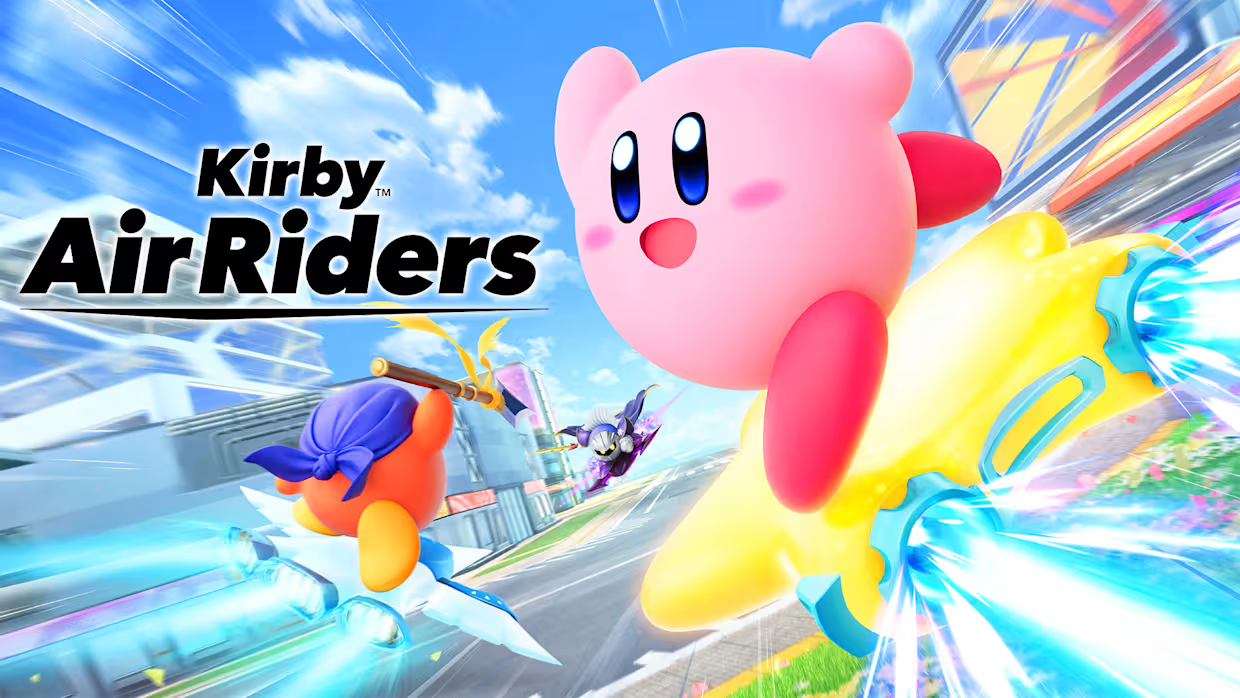
The original Kirby Air Ride is one of the more obscure GameCube-era games. At the time, it did not receive much attention outside of the Nintendo faithful, and while it has since attained the status of a cult classic, it still stands as one of Nintendo’s odder games. As such, the community was surprised when Nintendo announced a new Kirby game: it was not a follow-up to the critically acclaimed Kirby and the Forgotten Land, but instead Kirby Air Riders. Does the game improve on its predecessor? Does it live up to the hype of its legendary creator? Read on to find out.
The Premise – Complexity in Simplicity
On the surface, Kirby Air Riders is a racing game very much like Mario Kart. You choose a character from the Kirby universe, decide on a ride, and fling items and power-ups at your opponents as you race to the finish line. Furthermore, the game boasts an incredibly simple control scheme that just about anyone can wrap their head around. You steer your character by moving the analogue stick, and do everything else with just two buttons. As your rider moves forward by themselves, all that is left for you as the player to do is to charge your boost, drift and suck up enemies. This is done (by default) with the “B” button.
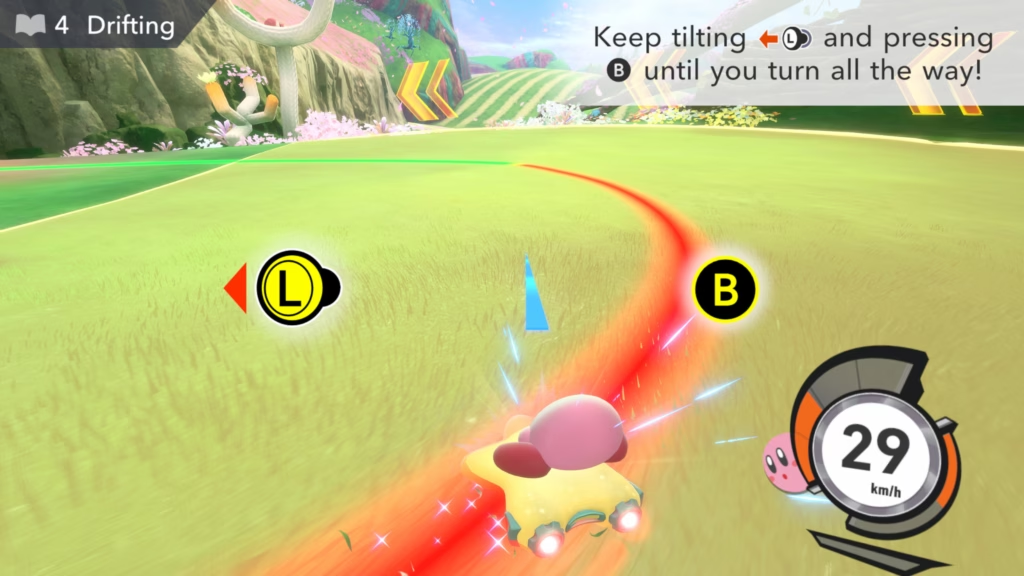
So how does this work in practice? Well, let’s go through a very simple example: you approach a corner. Instead of just steering through it, you want to get some more speed coming out of it. So you press and hold the “B” button to temporarily slow your cart. Doing so will fill up the bar surrounding your speedometer (see the bottom right corner of the image above). Once filled up, releasing the “B” Button gives your character a speed boost. Cleverly utilising these speed boosts around tight turns in races against tougher opponents.
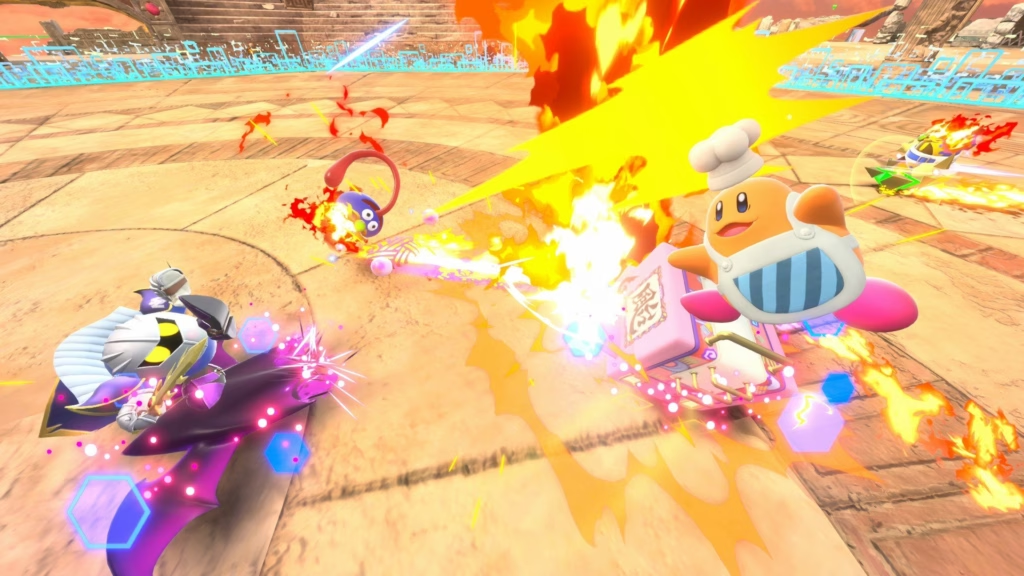
One of Kirby’s defining features is its ability to suck up enemies that try to get in its way. In Air Riders, all racers have this ability, and you guessed it, its mapped to the “B” button. Sucking up the various enemies that run across the track may give Kirby a temporary ability to use (such as the sword or the fire skill) or simply a moderate speed boost.
Ah! But there is, in fact, one other button that must be used from time to time. As you race through the level, fight your opponents, suck up enemies, and use your abilities, your character’s “special ability” charges up. Once fully charged, players are prompted to press the “Y” button to unleash a character-specific ability, which may damage their opponents and/or give a massive speed boost.
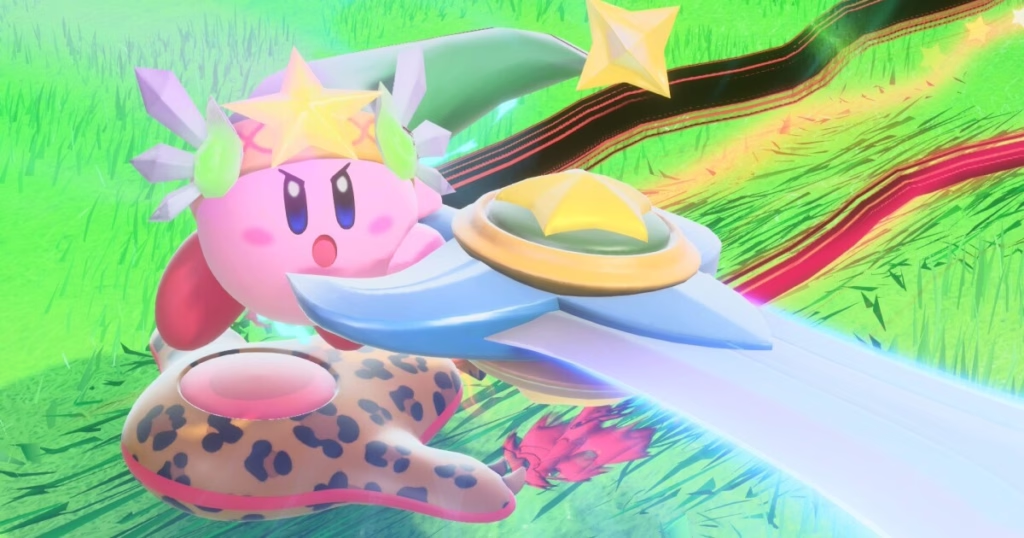
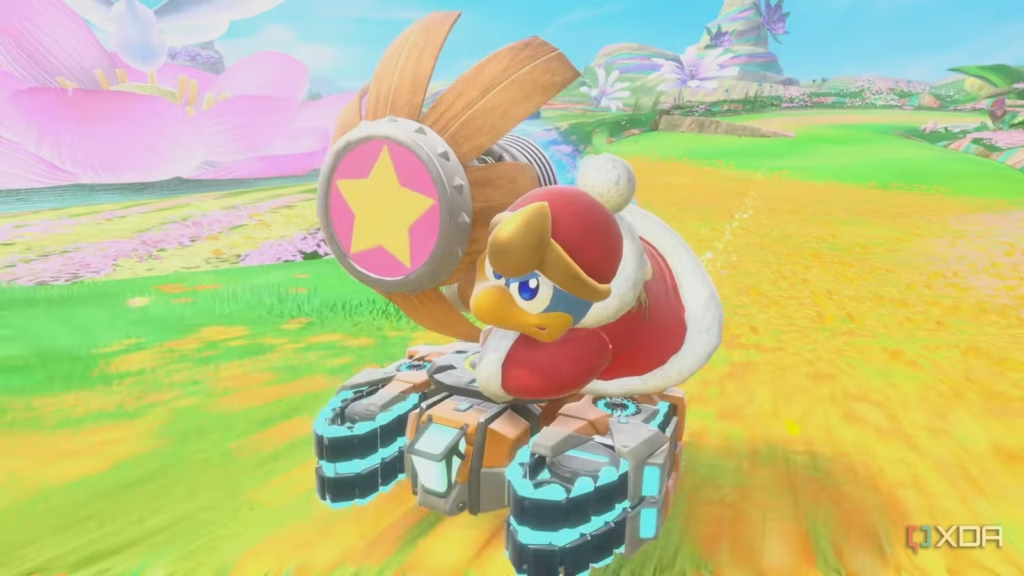
So how well does it all work? Honestly, it works better than it has any right to. The game is fast and furious, and the simple control scheme means that anyone will be able to make it to the finish line one way or the other. However, due to the nature of mapping just about every single movement option to a single button, more precision is required from the player. Try to suck up an enemy before it is in reach, and your character will initiate a drift. Try to do the same while in the air, and you will plummet to the ground.
A Wide Variety of Modes Means There’s Always Something to Do!
Masahiro Sakurai knows how to spoil his audience. Similar to his masterpiece Super Smash Bros Ultimate, he packed this game full of different game modes, really stretching what you can do in a racing game. Broadly speaking, there are four main game modes here.
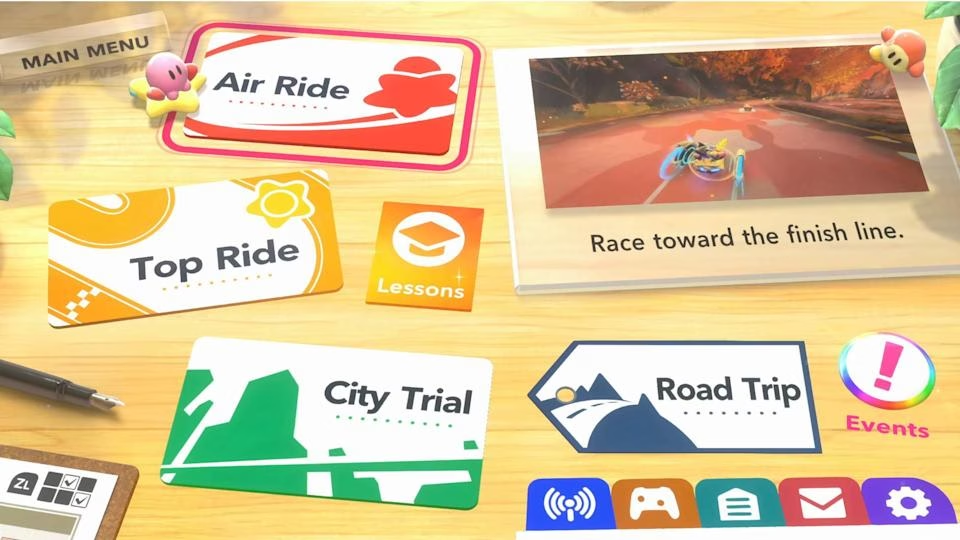
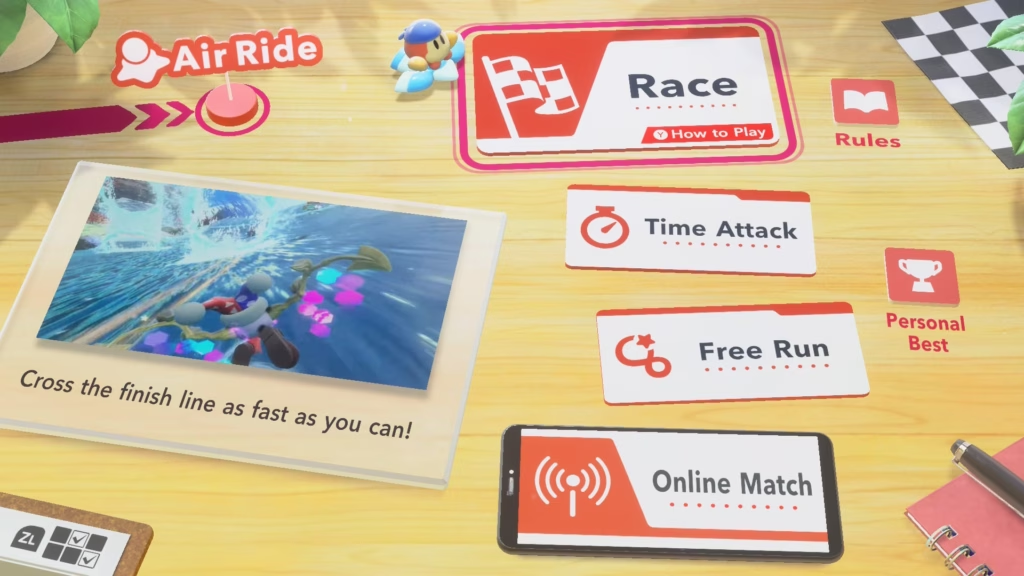
Let’s start with the most prominent one: Air Ride. This is the standard racing mode where you pick a character, choose their ride and race to the finish line in one of the several tracks. You can play either alone or with up to three other players locally. Similar to other game franchises created by Sakurai, players are given a lot of freedom and customizability to play the game just how they want it. Players can influence how levels are chosen, by whom, how many racers participate, the frequency of items, whether their rides take damage, and so on. Where some games may limit this to just a single game mode, the freedom to choose how you play is extended beyond just Air Ride into all other game modes. In my opinion, Air Ride is the quintessential Air Riders game mode that is sure to be what I will be coming back to frequently.
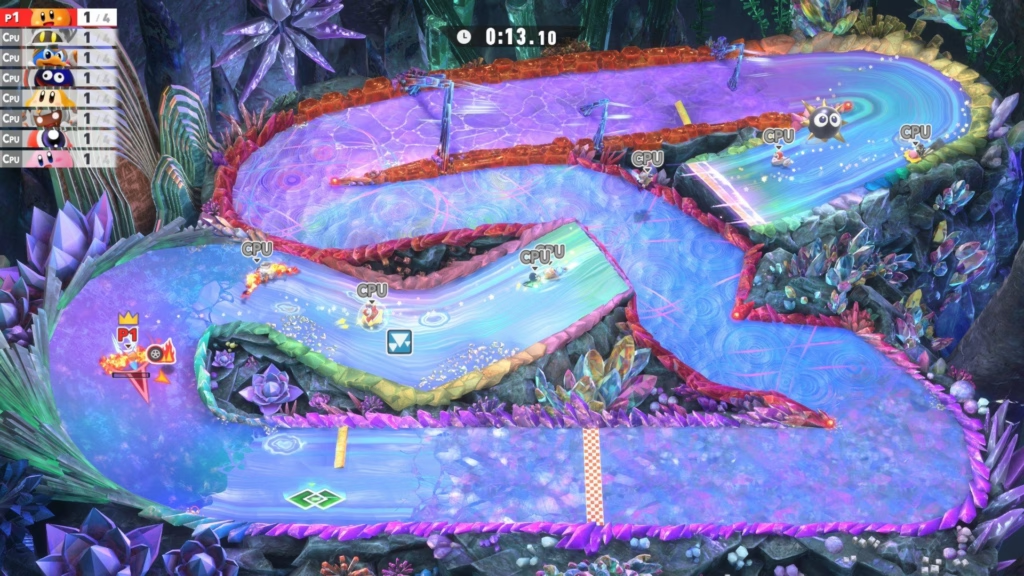
Next up is Top Ride. In Top Ride, players engage in short races from bird view perspective. The controls are slightly different here to accommodate the change in perspective, but at its core, the gameplay remains the same. Races are typically over within just a minute or two and are far less technically challenging than in the other game modes. Because of this, while it’s entertaining, it never amounts to more than a palate cleanser. Something small to play between more demanding races.
The game mode that stuck with most players of the original Air Ride was City Trial. City Trial feels like a culmination of all the different aspects of Air Riders. Basically, players race around a giant city (called Skyah), collecting power-ups that permanently increase their stats, finding just the right machine that pairs nicely with their acquired skills, and engaging in randomized global events (such as taking out boss-like mega-enemies from the Kirby franchise).
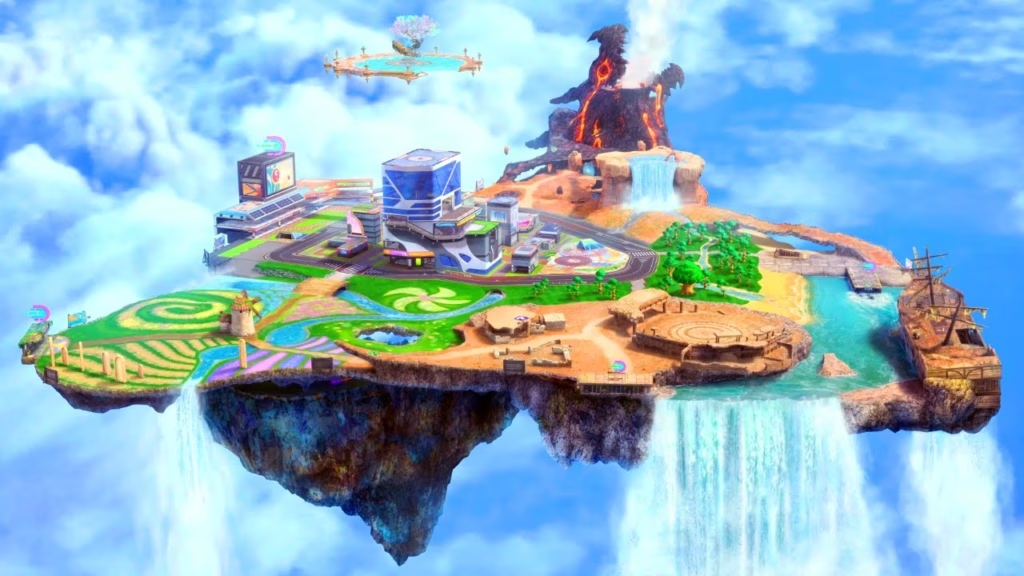
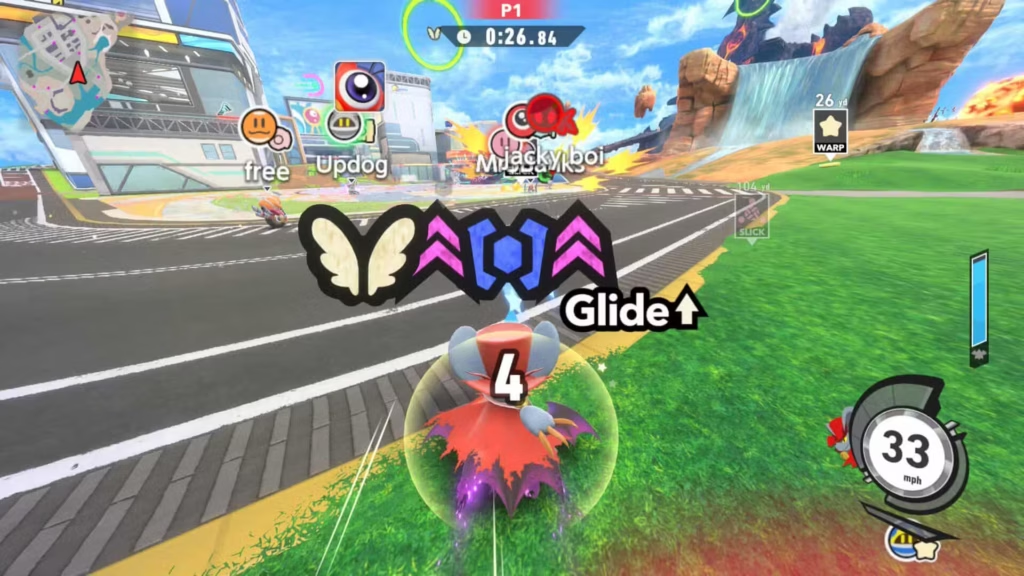
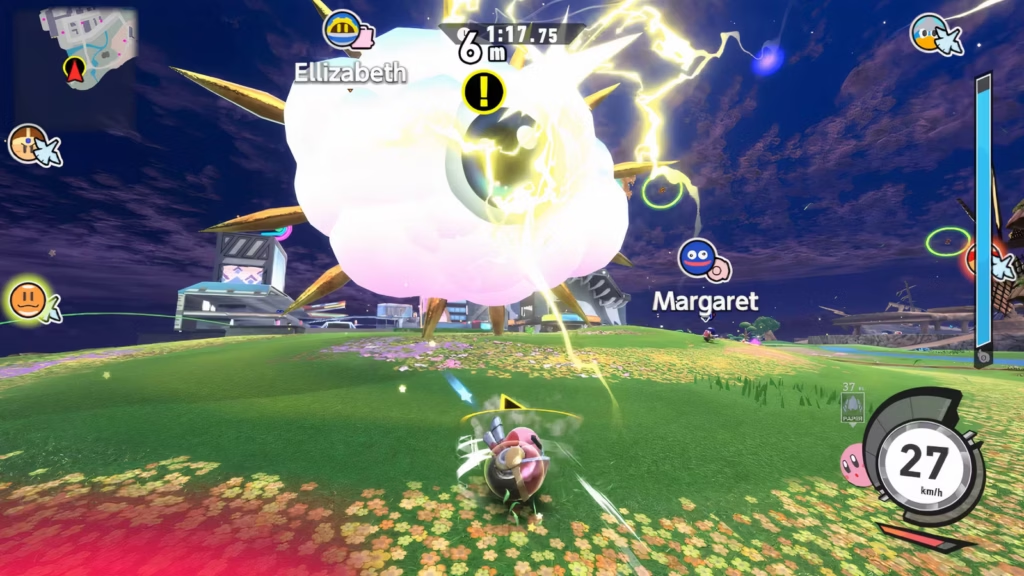
After a set amount of time, the game lets players choose how to compete in a final event to determine who wins this round of the city trial. Depending on how you have optimised your character and what kind of machine you are riding, certain game modes will be better than others. For instance, one final event could be the “High Jump”, where players are catapulted into the air, and the winner is determined by who can fly the highest. Players who opt for more ground-based vehicles, such as the Wheelie Bike, should try to steer clear of these game modes. Conversely, if you prioritise flight-based stats (such as glide and weight), choosing a “battle” focused game mode may not be the best idea.
City Trial is probably one of, if not the most, intriguing and unique take on the racing formula that I have ever seen in a game. As such, it pains me to say that while fans of the original City Trial from the Gamecube will be very happy to see its return, the mode failed to impress me. Not because it’s not well designed, but simply because it’s far too hectic for me to find much enjoyment in it. And while other modes, such as Air Ride, can be enjoyed very well with friends, playing this mode with more than one player makes it all the more difficult to actually see what’s going on. Unlike a race track, where you mostly need to concern yourself with what’s up ahead, City Trial requires you to take in your environment to find items, power-ups and see incoming threats. Fans of Mario Party-esque chaos will definitely find some enjoyment here.
A solo Roadtrip Reminiscent of World of Light
The fourth and final game mode is simply called “Roadtrip.” In Roadtrip, you chose a character to go on a road trip through the different levels of the game. Upon travelling through these levels, you undergo several smaller challenges to build up and level your character in a similar fashion to City Trial. These challenges range from simple races (both in the classic Air and Top Ride modes) to the challenges you would face in City Trial. However, you are almost always given the option to choose which challenge you want to take. So if you absolutely loathe the combat missions, you can almost always skip them without any issues.
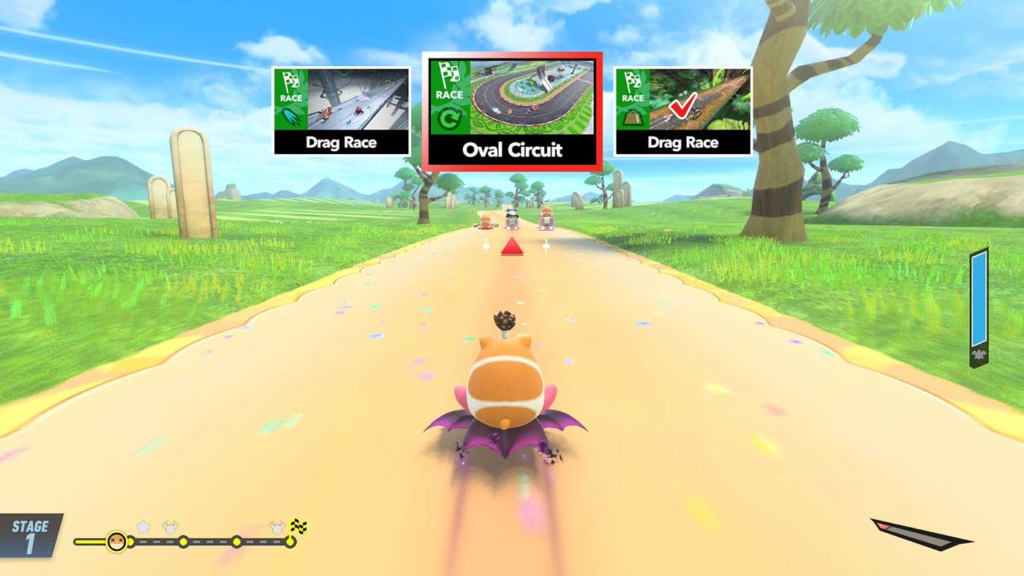
Each level ends in some kind of boss battle. Completing these (slightly more) difficult races unlocks a type of memory shard which advances the story. The premise is quite simple: one day, a bunch of machines rained from the sky. Many broke upon impact, but those that didn’t simply waited for someone to “awaken” them. These would be the riders of our adventure. However, one day the riders noticed their machines reacting to some strange, faraway signal, and thus began our road trip on the way to the source of that signal.
Similar to what “World of Light” was in Super Smash Bros Ultimate, Roadtrip does the same in Air Riders. And for what it is, it’s an amazing mode. I would lie if I said that I could play this for dozens of hours straight, but it offers an entertaining single-player adventure that most racing games simply don’t care to add. Compared to games like Mario Kart, where the only option you have playing solo is replaying the Grand Prix over and over, Roadtrip offers something unique that makes you feel like you are getting your money’s worth.
The Verdict
Kirby Air Riders is a wonderful follow-up to a cult classic. It expands on every single thing that fans loved about the original. There are few racing games that offer so much in terms of game modes and options that even Nintendo’s own flagship racer appears empty in comparison. The game plays like a dream, looks great, and has some extra goodies (such as amiibo support) that I wasn’t able to get into because I’m still finding new menus and features. However, despite all those positive aspects about the game, I do not think that this game will leave its niche. Playing this game with friends, I could tell that its frantic nature was simply not meant for everyone, and after playing a couple of rounds, we found ourselves gravitating back to Mario Kart. City Trial is just too chaotic for its own good (especially when played with a group of very casual gamers), and Top Ride is barely even a game mode. And while Air Ride and Roadtrip are fun, for my taste, the rounds end almost too quickly, to the point where you spend just as much time setting up a round as you do playing it.
Kirby Air Riders will find its audience. And while I cannot deny its incredible quality, I know it’s not the kind of game that will keep me occupied for very long. And neither will it find its way into our regular game rotation for game nights with friends.