The Kirby franchise has always been a rather strange series to me. On the one hand, they feature some of the most inventive cute-sy games I have ever had the pleasure of playing, but on the other hand, these games often tend to be the simplest, most childish games out there. Do not get me wrong, I have absolutely no problem with games geared to a younger audience, but the Kirby series has always walked that fine line between too childish and wonderfully accessible for me.
During the lifetime of the Nintendo Switch, Kirby released its first true 3D Platformer, akin to the likes of Bananza and Odyssey. And while I originally dismissed it as “just another Kirby game, I’ll play something else,” the relentless amount of good news (as well as having a friend share his copy with me through gameshare) ultimately pushed me over the edge to give the game a shot. What I did not expect was to have my mind blown by the sheer amount of creativity on display here.
Seeing as this is a game that runs on both Switch and Switch 2 I will be commenting on all the features of the game. If there are elements unique to Switch 2, they will be marked as such. Look out for that Switch 2 Logo!
A cute but simple premise
If there is one thing Kirby games are NOT known for, it is their intricate stories. Kirby and the Forgotten Land does very little to shake up that formula. One day, as Kirby walks through the world of Dreamland, a portal opens up that proceeds to swallow up everything – including our titular hero. Kirby wakes up to find themself in a world that looks remarkably similar to our own. With skyscrapers, vending machines, street signs, and many un-Kirby-like elements.
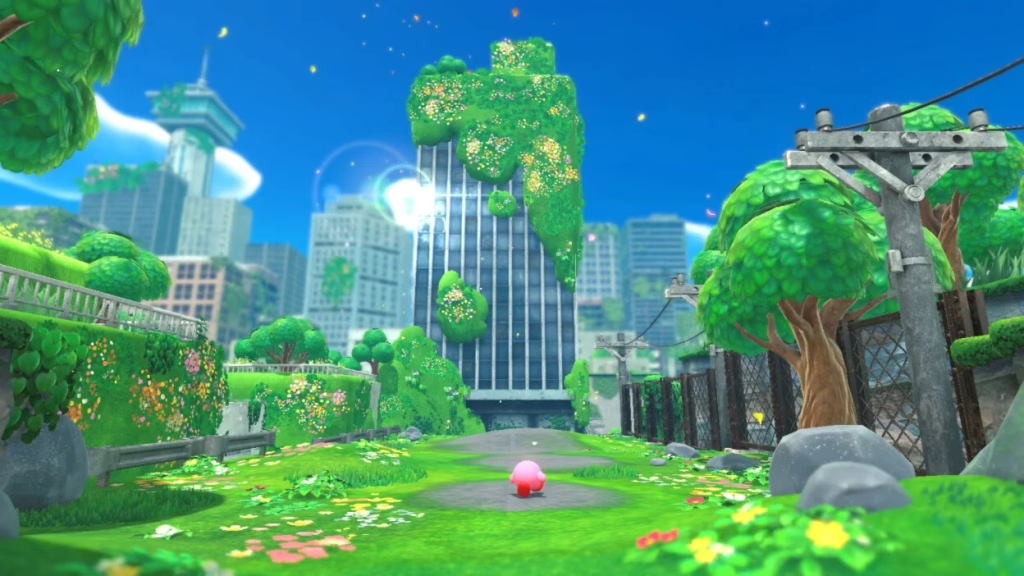
After a kickass opening, Kirby finds a new friend, Elfilin, and the two of you set off to save he waddle dees that monsters have captured. All told, the plot may not be anything revolutionary. It’s right along the line of a kid-friendly Saturday-morning cartoon, but that’s fine. What does stand out positively are all the worlds Kirby visits. From beaches to abandoned malls, all the way to strange research centers. There is a lot to see here, and while the narrative doesn’t ever truly evolve beyond the original premise, the game takes our heroes on quite the journey.
The Switch 2 factor – more of the same
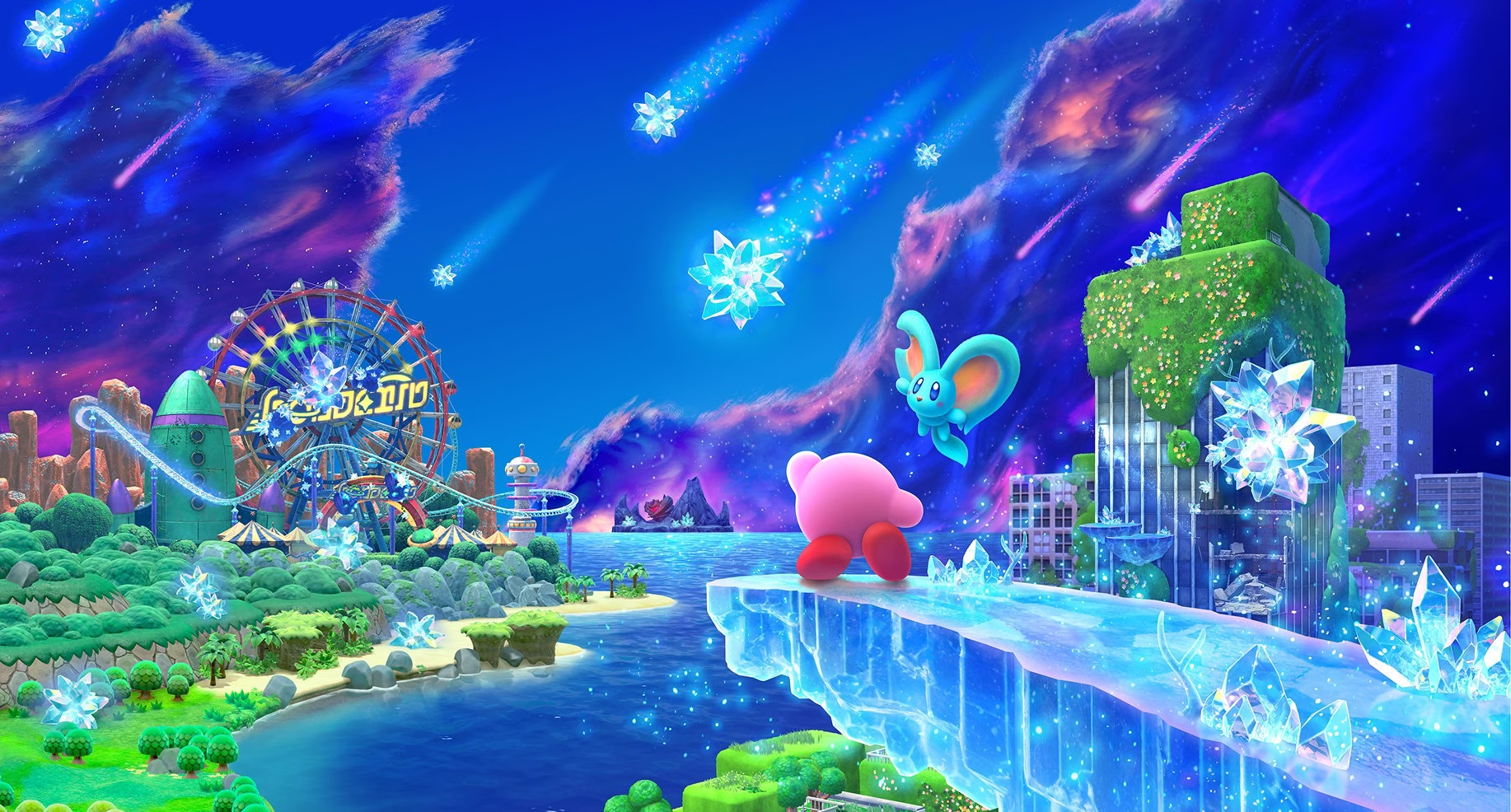
In the Star-Crossed World expansion, the world is rocked when a meteor crashes into the ocean thereby raising a volcano from its depths. This event unleashes a dark force that begins to encroach on the different worlds Kirby visits. Kirby must now embark on a quest (this can be done in parallel to the main campaign) to free the “Starries”, i.e., this expansion’s cutesy NPCs, travel to the volcano, and seal the meteor from…taking over the world? It’s all a little silly, but it’s a story that fits neatly into the Kirby brand and is…serviceable. Just keep in mind that the Star-Crossed World can only be started once you have finished the first world (Natural Plains).
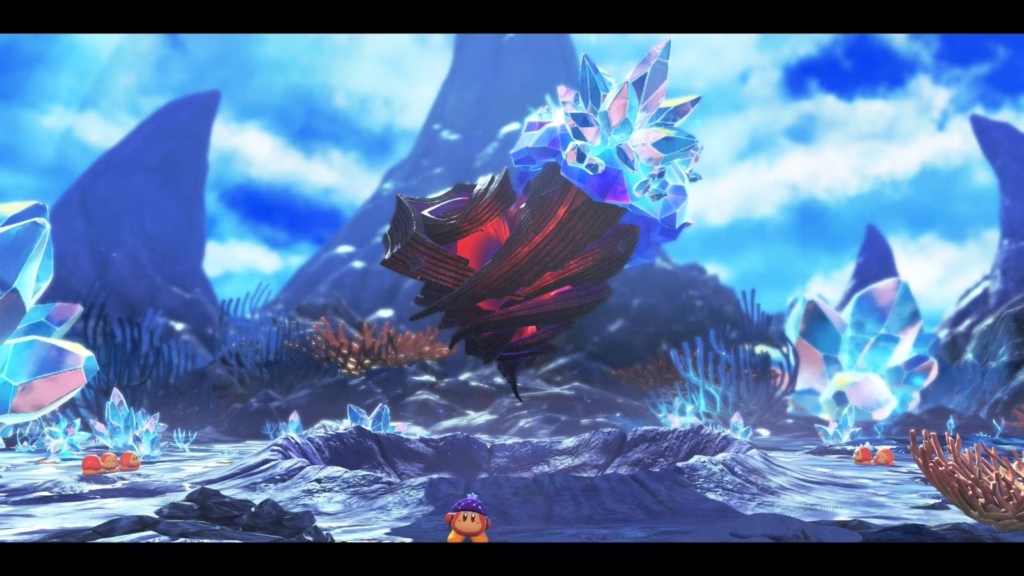
I think it’s fair to say the story is not bad. Star-Crossed Worlds plot is nothing to write home about, but let’s be honest, nobody is buying a Kirby game, let alone its DLC, for the plot.
Wonderful artistic direction despite clear cutbacks
Let’s make this clear: Kirby games have never been used to showcase a system’s technical prowess. These games don’t do anything all too fancy in terms of particle effects, resolution, or framerate. They never have, and so Forgotten Land doesn’t either. That is not to say, though, that the game is ugly – quite the opposite!
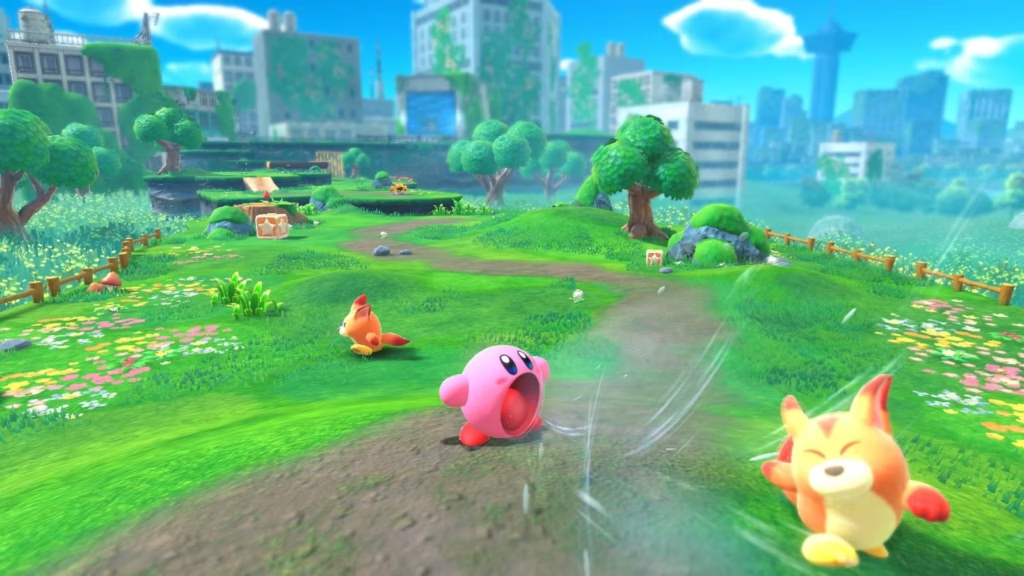
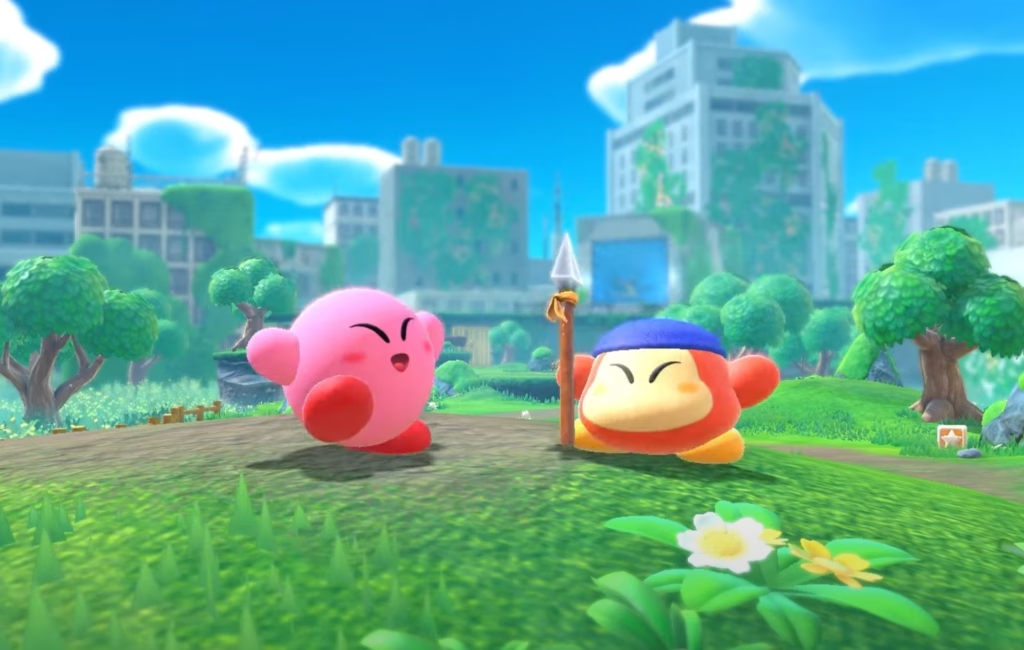
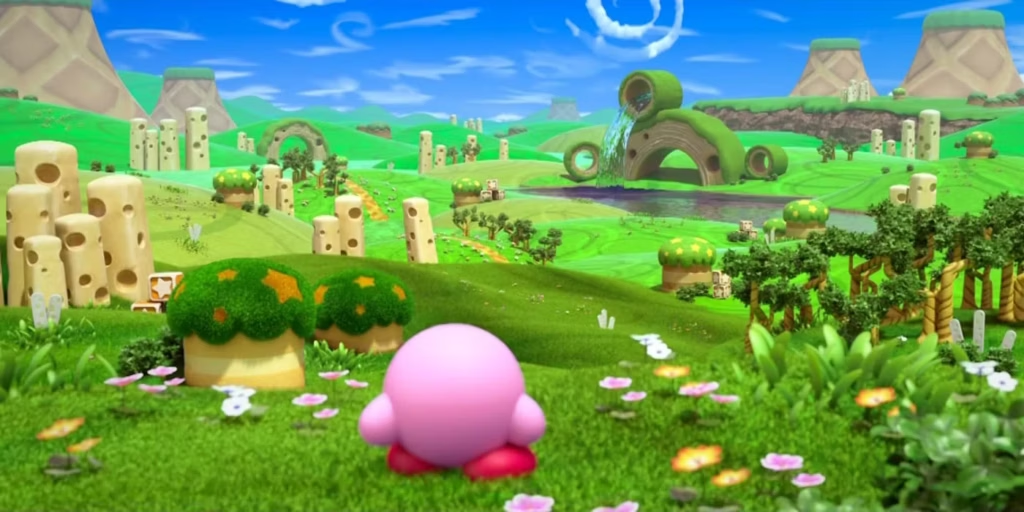
The artistic direction of this game is vibrant and emotive. Never before has Kirby looked and reacted to his environments like they do here. From the way Kirby shakes when they suck up his environment, to the liveliness of the levels, it is clear a lot of thought has been put into how this game looks. Just look at some of these screenshots:
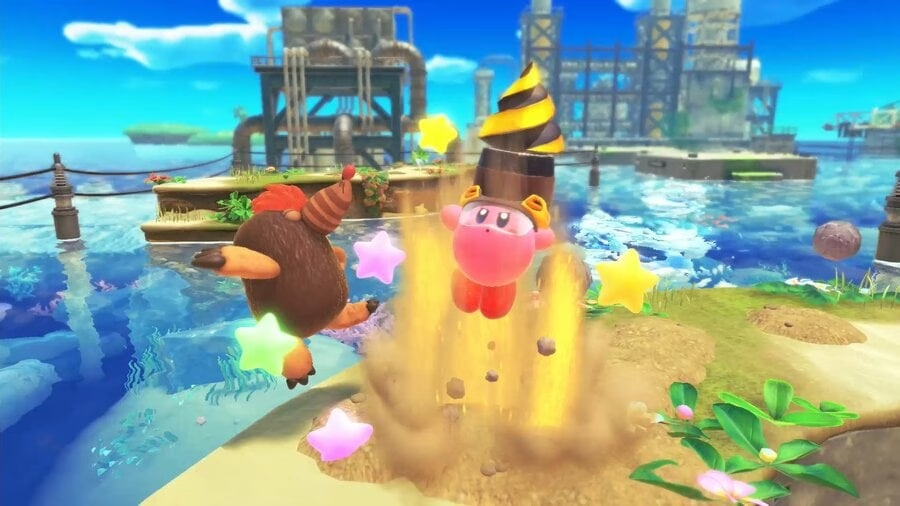
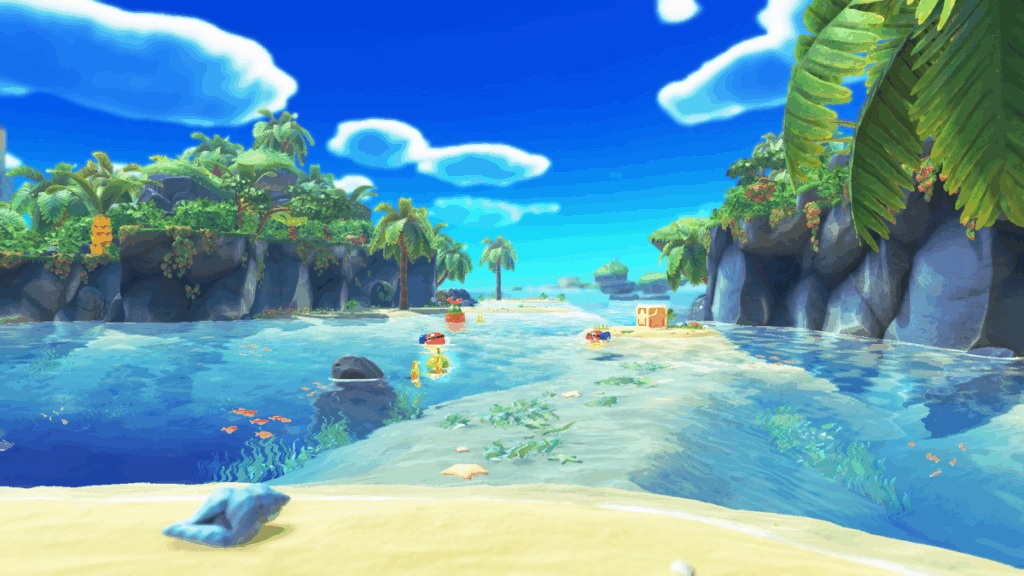
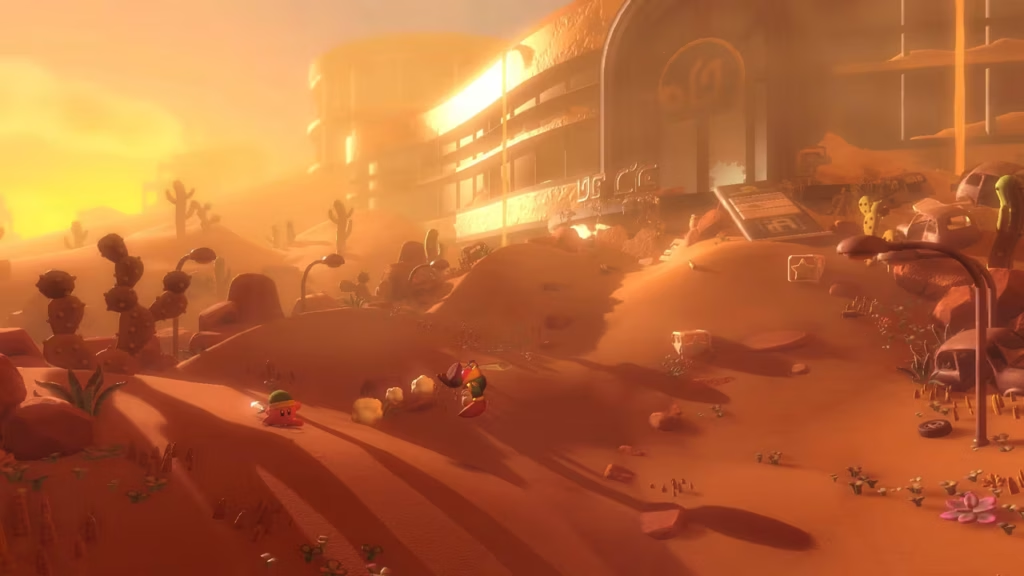
Despite the game being set in some truly beautiful locations, there is one big downside to all this: the obvious concessions that had to be made for the game to run this game. For the most part, the game runs at a very solid 30 frames (somewhere around 1080p docked, 720p undocked). However, at certain distances, enemies are rendered at a far lower frame rate. This means that when the camera pans out, and you see what’s ahead of you, you will see enemies move at single-digit framerates. That’s not a pretty look, and it shows just how stretched the Switch’s hardware was towards the end of its lifetime. Sadly, even when playing this game on a far more powerful Switch 2, this issue persists…unless you decide to buy the upgraded Switch 2 version!
The Switch 2 factor – all it took was the extra horsepower to fix this game
By getting the dedicated Switch 2 version of the game (or upgrading your existing Switch version), the full game gets a graphical makeover. That’s not to say you get upgraded textures or anything like that. No, instead, this graphical update focuses on bringing the framerate up to a solid 60 FPS and buffing the resolution to 1440p in docked mode. This update also fixes the issue described above with variable animation of enemies depending on your distance from them.
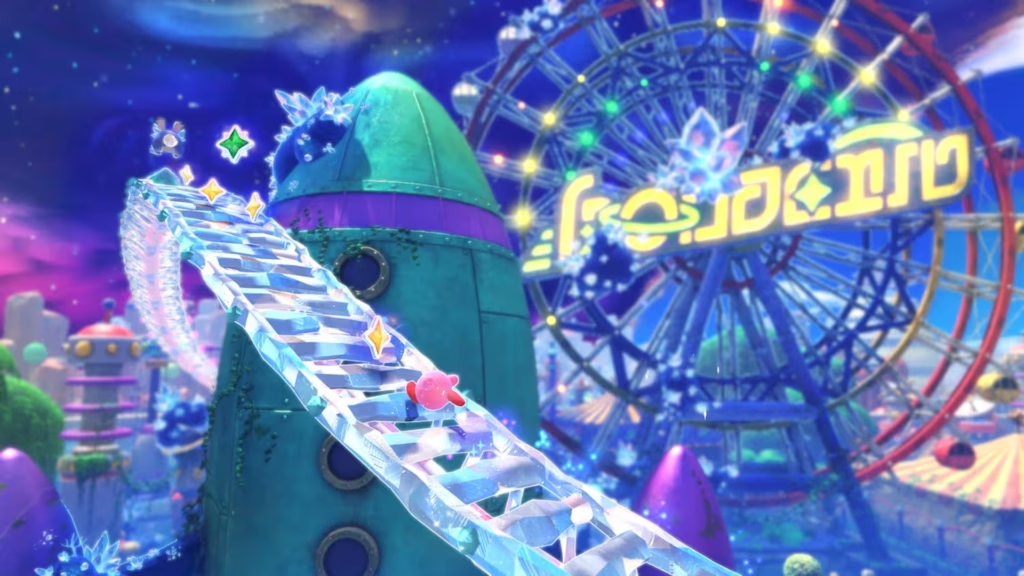
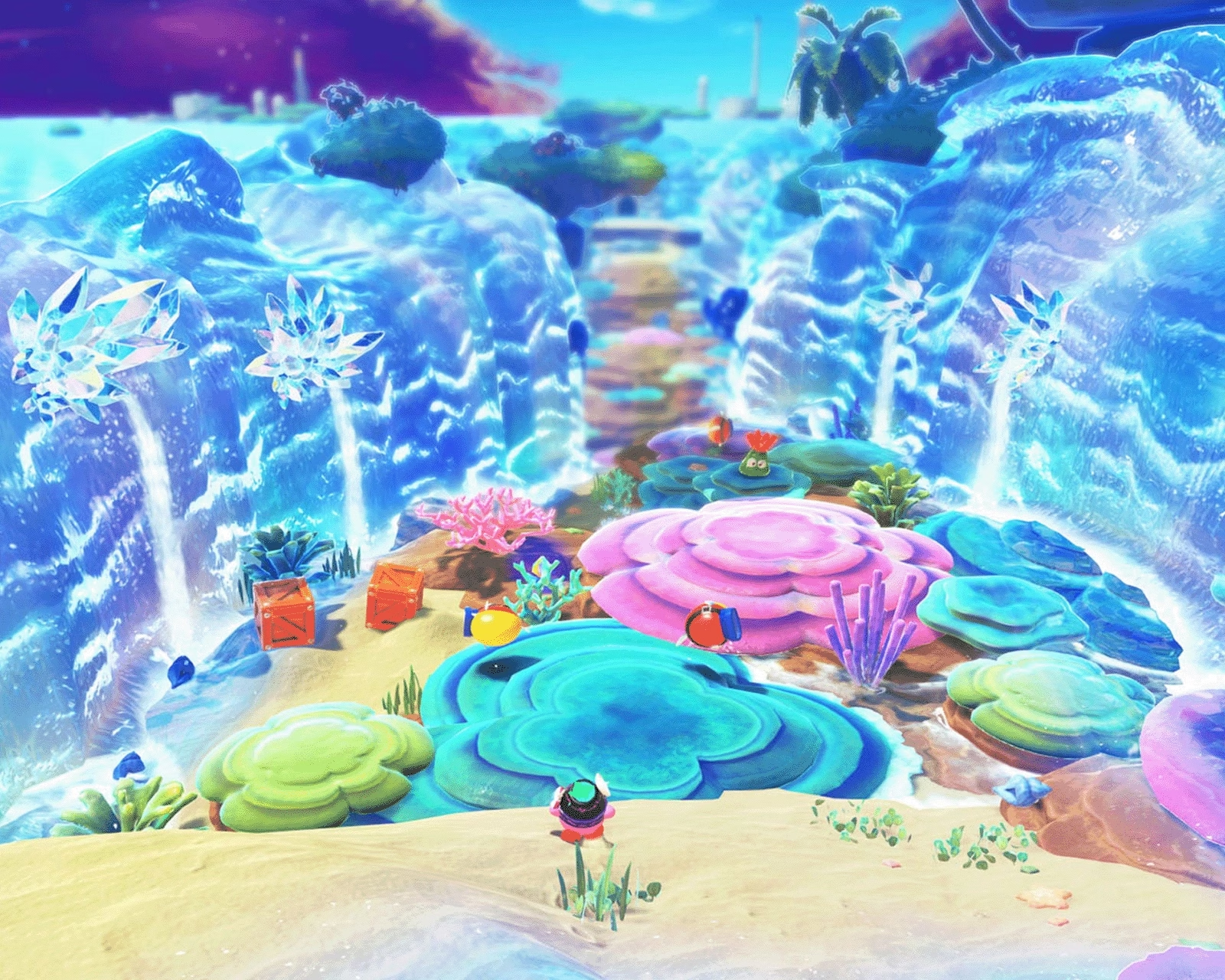
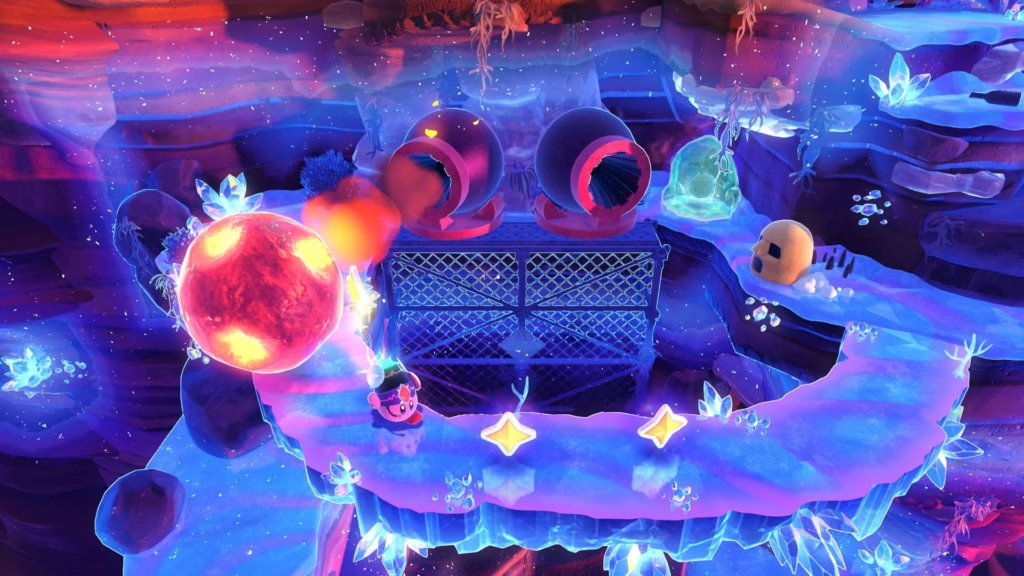
Overall, I feel like the update, considering it’s paid for, does what should be expected. In that regard, the update to this game feels a lot like what Nintendo did with the update to the Zelda games, except this time around, we get a whole new campaign to play around with as well.
Gameplay is king
Kirby’s moveset has not changed much in recent years. For the most part, Kirby will jump, float, and suck up any enemies’ abilities. That last part was what gave Kirby variety in their playstyle. A classic example is Kirby’s Sword copy-ability, whereby Kirby transforms into a miniature version of Link.
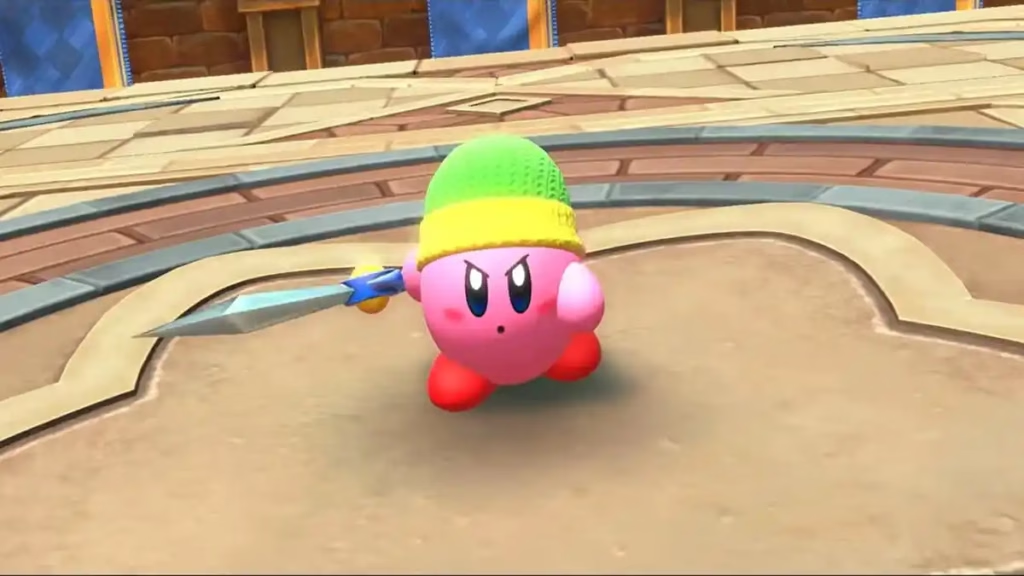
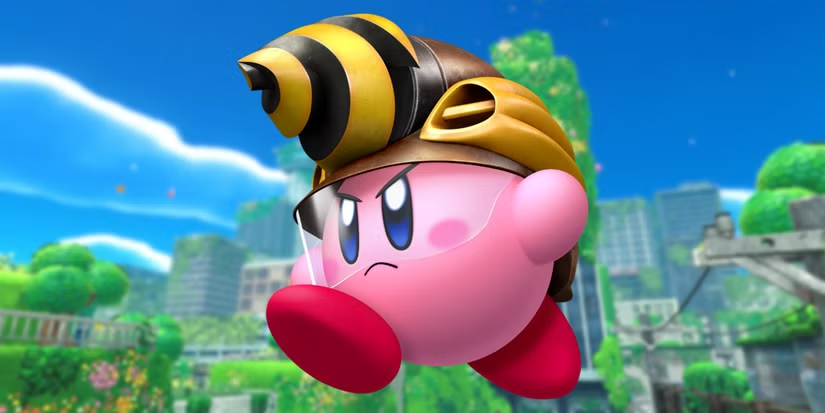
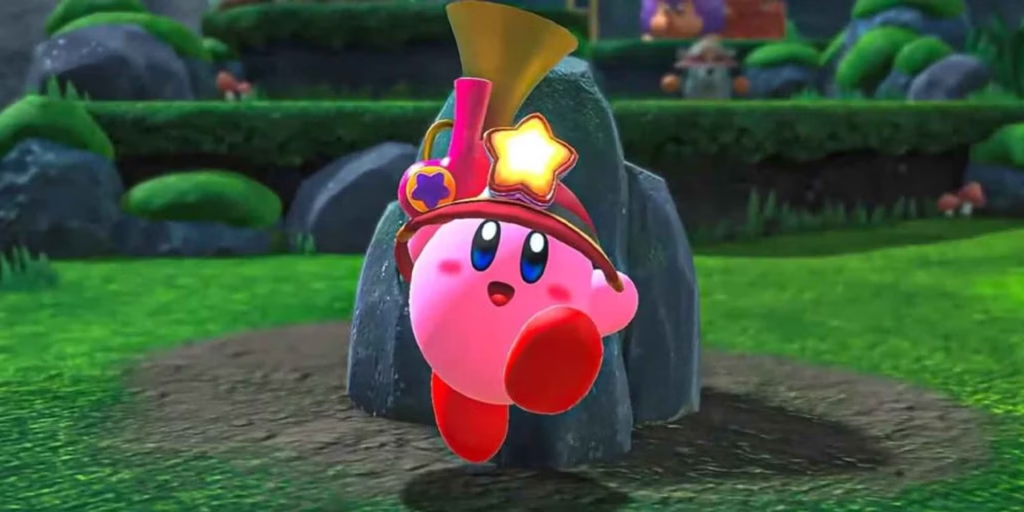
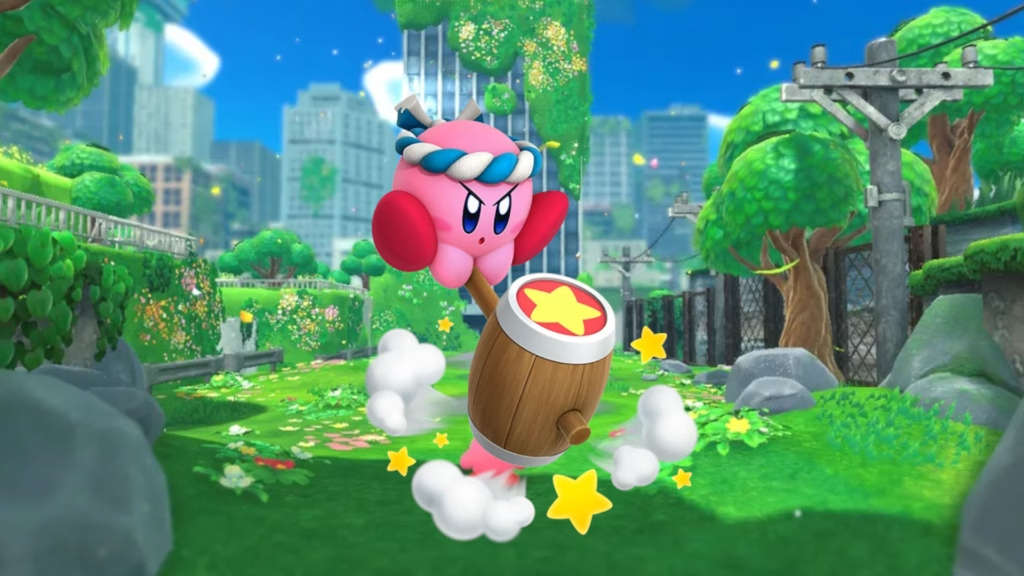
In Forgotten Land, Kirby’s moveset is expanded substantially! Not only are there a plethora of different copy-abilities, Kirby can now dodge attacks Bayonetta-style, and of course, there are the new “mouthful abilities”. At certain points in a level, Kirby will come across a shiny “thing”. This “thing” could be a car, a vending machine, or something else entirely that Kirby can suck up. Doing so lets Kirby inherit the basic functions of that “thing.” So, for instance, if Kirby swallows up a car, well, they will drive through the level. By sucking up a vending machine, Kirby essentially turns into a soda can spewing machine gun. These rather awkwardly named abilities are not quite as regularly available as those that enemies give you. And while they are very entertaining to use, they usually serve as a way to complete puzzles thrown at you. Where the copy abilities give you a multitude of ways you can defeat your enemies, these mouthful abilities are far more scripted.
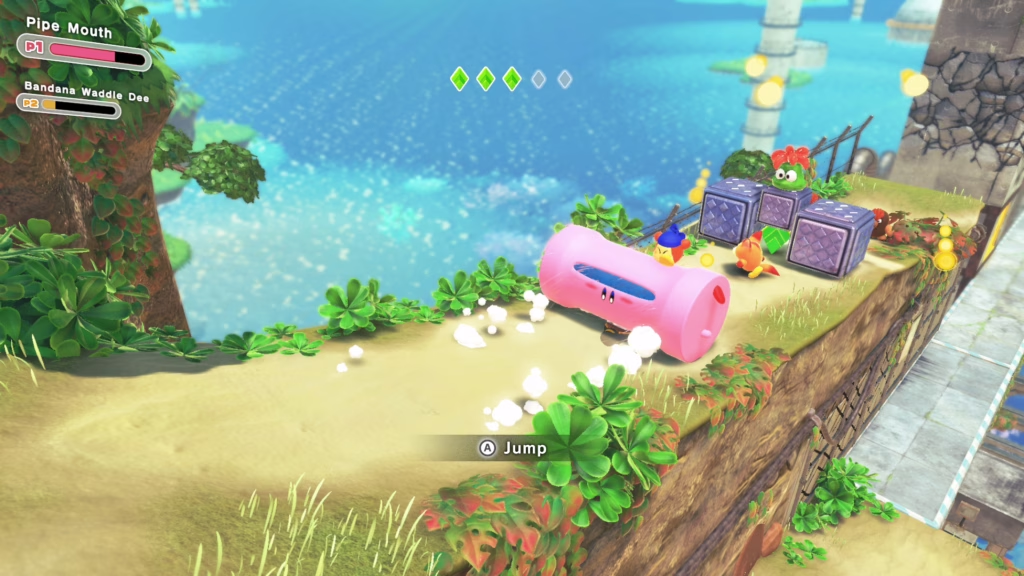
All told, all these abilities (scripted or not) result in a game with a relatively large amount of variety in the gameplay. And if that were not enough, Kirby is given the opportunity to upgrade these abilities, which not only changes their stats (damage, speed, etc.) but sometimes completely switches up the feel of the ability. It’s truly fantastic. I don’t want to spoil these upgrades here, because some are truly incredible, but given the option to switch between the different stages of a copy-ability gives the player more choice than ever before. Simply fantastic!
Lets take a look at the actual levels! Similar to what you may know from classic Mario games, this game has several different worlds for you to visit. Each world has roughly 5-7 different levels for you to play through and several challenge missions to unlock. The levels themselves are basically all you’ve seen from the trailers. They are appropriately long and don’t wear out their welcome. In fact, the player is motivated to replay them several times to free all the Waddle Dees. Just finishing the level nets you around 3 Waddle Dees, but most missions have a total of around 10 Waddle Dees to free. Sometimes this may require the player to find hidden paths or use the right ability in certain situations. Depending on whether you are the kind of player to care about these kinds of things or not, this may extend your playtime significantly.

Thankfully, collecting these Waddle Dees actually serves a purpose! See, this game has a hub world in the form of Waddle Dee Town. As you save more of the Waddle Dees, they open up shops, cafés, and even a cinema, slowly but surely breathing life into what starts out as a ghost town. And if you like collectibles, then…well I hope you like gacha machines! For some odd reason, defeating enemies and completing objectives sometimes grants you a gacha capsule. Within those capsules, you can find figurines of Kirby, enemies, bosses, and random objects you find across this world. Some figurines are pretty cute, or even cool (in the case of the bosses), but ultimately, they largely exist to give you something to grind for as you try to go for 100% completion.
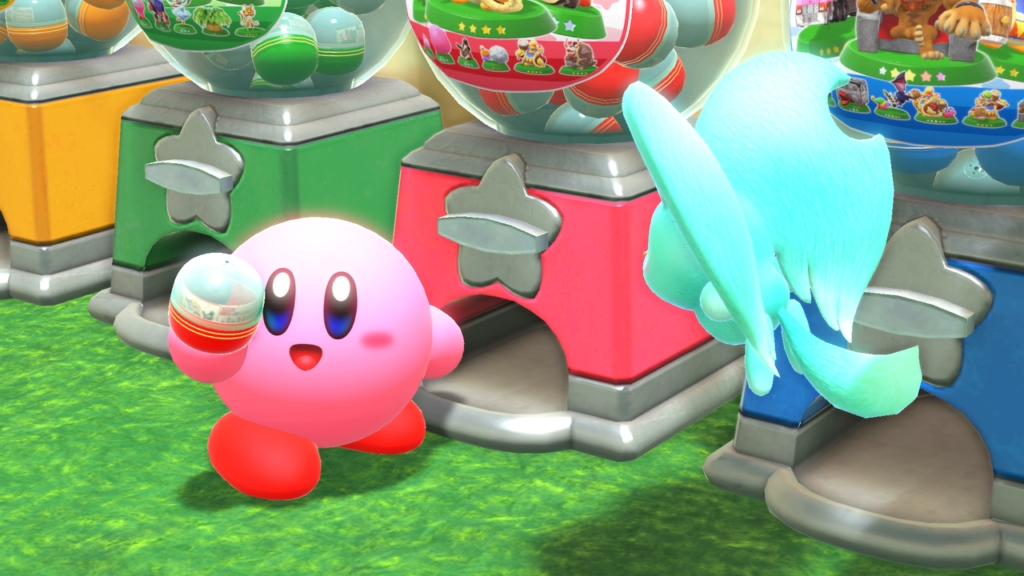
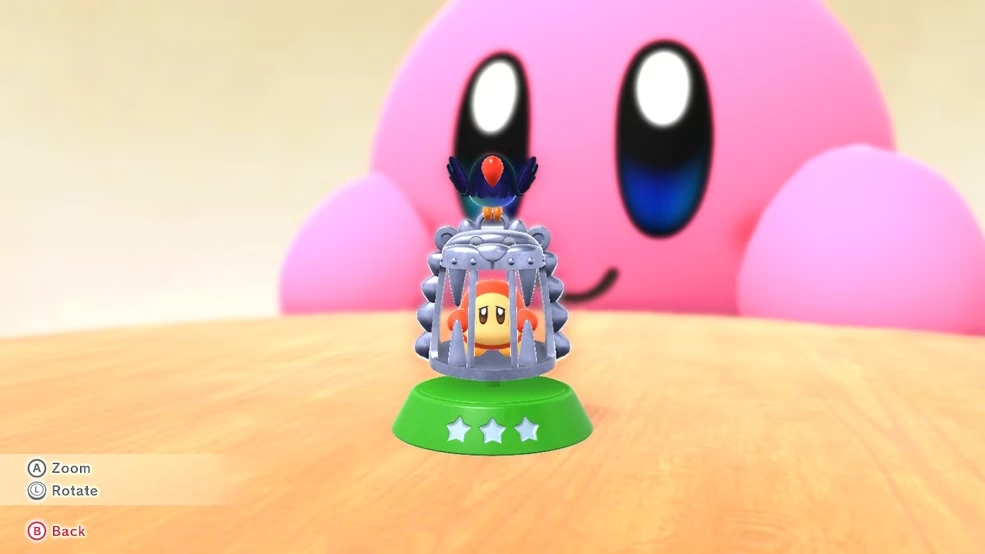
All told, between the Waddle Dee liberation campaign, several worlds for you to explore, the challenge missions (that test your skill with specific copy-abilities), and the all-important gacha collecting, this game is actually quite content-packed. It is admittedly not the most complicated or difficult platformer out there. It is, after all, a game that targets a younger audience. However, some of the later levels had this seasoned platformer enthusiast sweating a little more than he thought he would while playing a Kirby game.
The main selling point: Star-Crossed World
So with the Switch 2 version of the game, players are treated to even more Kirby-licious content. After finishing the first world, a meteor crashes into the planet, giving you access to the next set of levels. These levels are re-imaginings of the original game with a more difficult twist to them. All told, we are given reimaginings of 12 levels from the base game, and on paper, that might sound a little disheartening. It’s only when you stop and think about it that you realize, this equates to roughly 2,5 worlds from the base game. The reimagined levels have also been wonderfully expanded and changed to the point where they feel completely different. You can often clearly recognize the elements of the “base” level, but the star-crossed flavoring freshens up the experience in a wonderful way.
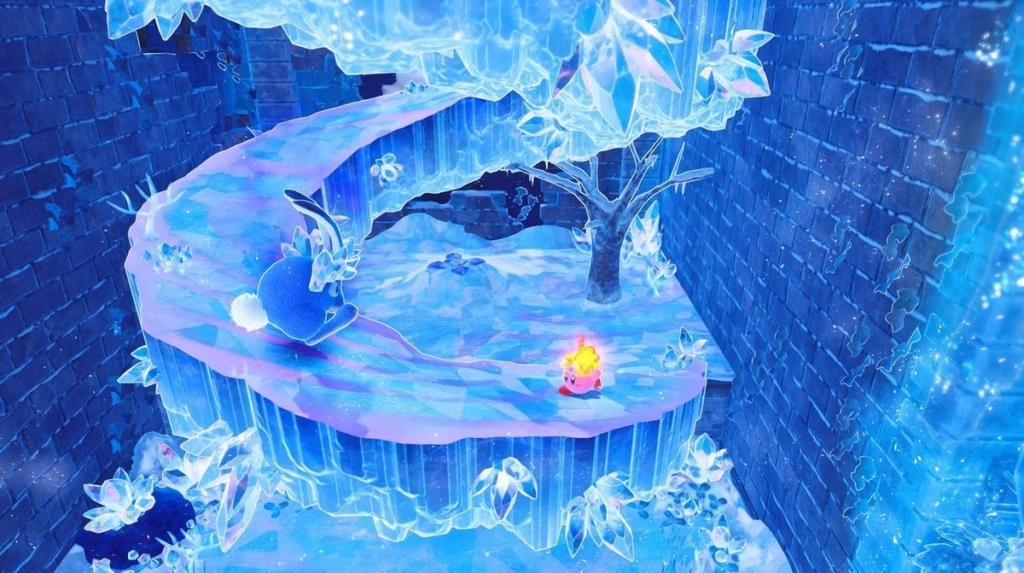
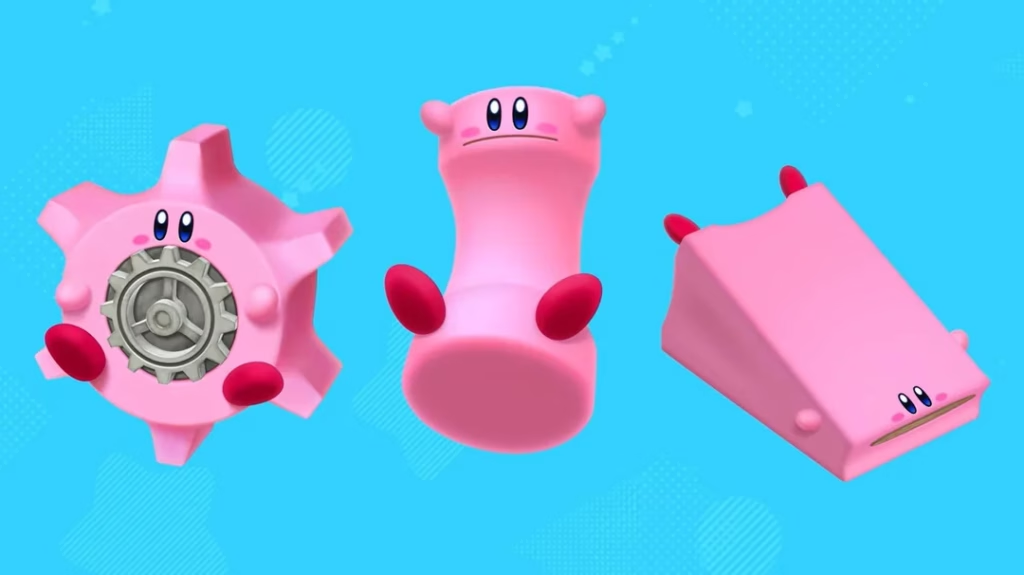
And its not just a mere paint job either. In a way, these missions can be treated as challenge levels as they are, in general, a bit harder than the base game. The new enemy types definitely do not make your life any easier. Thankfully, you are given new tools to play around with. There are three now mouthful modes: spring, billboard (?), and cog. However, just like their base game brethren, I did not find these to be true game changers in any way. They are not bad by any means (the cog, especially, is quite fun!), but they do not make or break the DLC.
Beyond the power-ups and the extra levels, you also get a whole new batch of collectables as well as a new coliseum mode to test your mettle. So, where does all that leave me with regards to the DLC? It is a tough one, I am not going to lie. On paper, this DLC adds 2,5 new worlds, with remixed stages of the base game, new power-ups, and, crucially, a proper Switch 2 performance boost (all the way up to 60FPS). Star-Crossed World is definitely not a bad DLC by any means, but 20€ is a lot to pay extra for. Especially to those players who have already completed and (like me) devoured the first game; those who have gotten that 100% clear screen, it’s not a lot of extra content to be coming back to. But it is a good time. And those extra frames and pixels in the base game freshen up the experience as a whole.
An unforgettable journey to a forgotten land
Kirby and the Forgotten Land has surpassed my wildest expectations. Admittedly, I didn’t have huge expectations to begin with. But this game won me over with its charm and sheer gameplay finesse. There are plenty of levels to keep players (especially the younger ones) playing for a long time, and upgrading copy-abilities to unlock new ways to take out your foes never got old. While the mouthful abilities felt a little gimmicky, driving around a pseudo-race track as car-Kirby never failed to put a smile on my face. Sure, the graphics are not perfect, and certain concessions seem weird given the simplistic nature of the visuals. But ultimately, they don’t detract from the overall experience. And if you have access to the Switch 2 version, well then, it’s a non-issue.
This game made me take Kirby games seriously. That’s about the best compliment I can give it. I wholeheartedly recommend this game, not only to younger players, but also to those of us who are long past the age of caring about what games “make us look cool” or “are only for babies.” The Switch 2 exclusive Star-Crossed World expansion largely adds more of the same. It’s very good and polishes up the main game in a substantial way. Is it 80€ worth it for the whole package? Hmmm, that’s a tough one, but you can always get the first game used, and then buy the 20€ upgrade pack. It’s what I did, and I don’t regret it one bit.