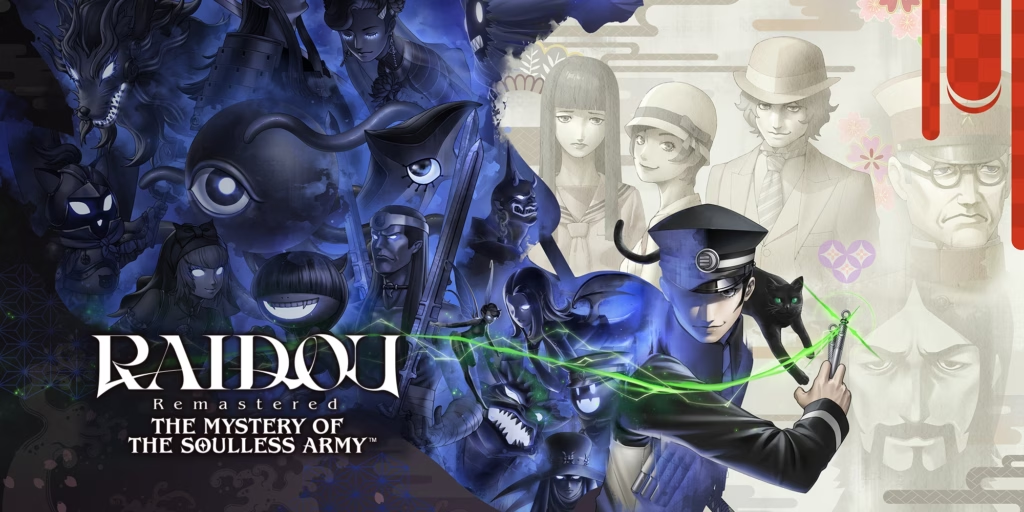
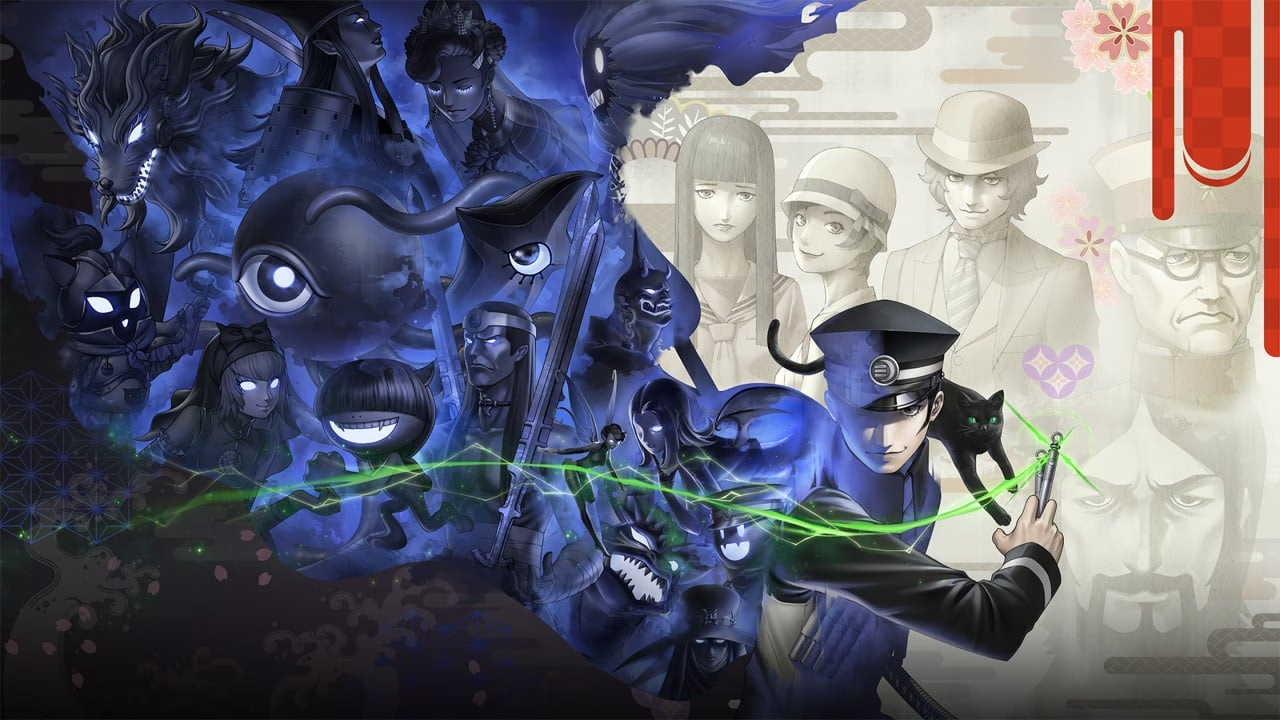
I have a weird relationship with the Shin Megami Tensei series. Originally, I got into the series with Persona 4 Golden. I know, I know. That game didn’t even carry the Shin Megami Tensei (SMT for short) moniker, but the original Persona 4 did…so cut me some slack. Anyhow, after getting a little too obsessed with that game, I was eager to try out other games from the SMT series, such as Shin Megami Tensei III and V. But for some reason, despite recognizing that the core SMT games are mechanically very solid, I could never quite get into them as much as with the Persona series. Maybe it’s the more humorous undertone of the Persona series, maybe the overall SMT-style just didn’t invite me to play more. I really can’t tell you. Nonetheless, wanting to play something on my shiny new Switch 2, I decided to purchase Raidou Remastered: The Mystery of the Soulless Army (henceforth just Raidou because I refuse to write out that whole title every time) to see if it could break the SMT trend.
The Story – a more light-hearted SMT tale
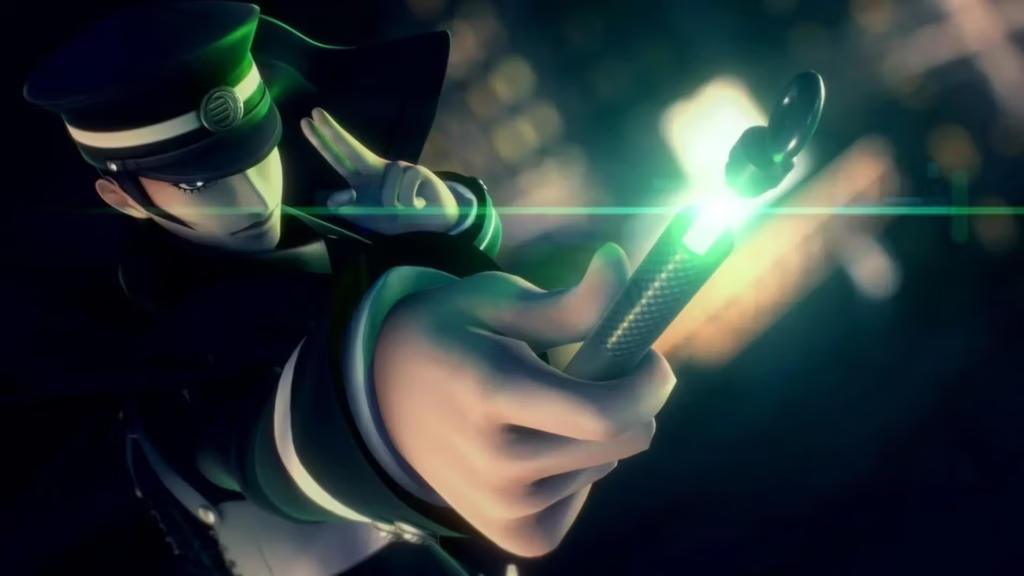
The story features a young protagonist (whose name you choose) who grows up in the Kuzunoha village. The people of Kuzunoha have a long and proud tradition of bringing forth devil summoners. Those are people capable of not only seeing ghosts and demons, but also being able to capture them and use them to do their bidding. Using the powers of evil for good is the name of the game for devil summoners. These special devil summoners are referred to as “Raidou Kuzunoha.” And it just so happens that our protagonist has the honor of being Raidou Kuzunoha XIV.
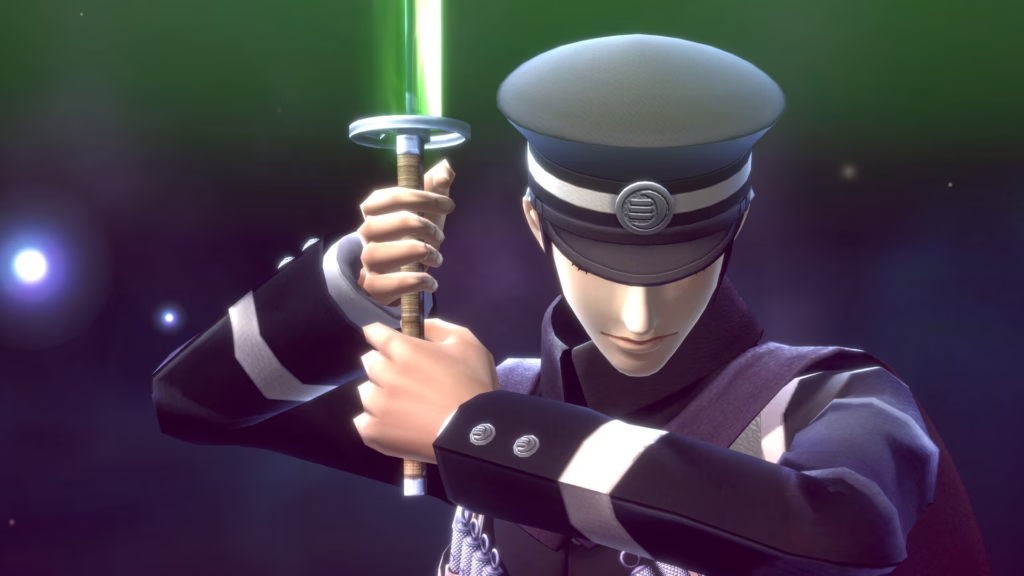
Our Raidou embarks on a journey to Edo (old-Tokyo), during a time of political and social turmoil in Japan, to work at a detective agency that specializes in supernatural cases. And so Raidou dons the mantle of a detective and joins up with Narumi, the agency’s owner, to help solve mysteries caused by demonic powers. It is then that one day, a girl rings up the agency asking to meet her at a bridge. Upon meeting her, she tells you that she is cursed and asks to be killed right there on the spot. Just as Raidou and Narumi are figuring out what’s going on, two red-caped soldiers show up out of the blue to kidnap her. This is the start of what is a rather enjoyable tale, taking you through the streets and districts of Edo to uncover smaller mysteries. And with each case you solve, the bigger picture, the mystery behind this girl’s capture becomes clearer.
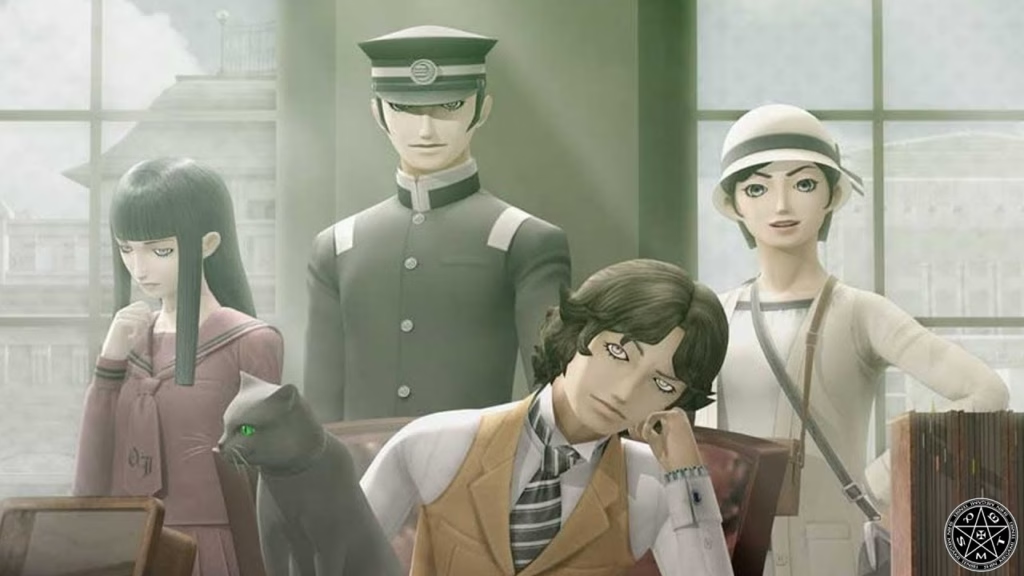
Compared to the likes of an SMT III Nocturne or the excellent SMT V, Raidou has a light-hearted story. Sure, there is plenty of murder, despair, and other mature themes, but typically, things are kept quite tame. It’s not as happy-go-lucky as the Persona series, but it’s a far cry from the despair of the older SMT games. The fact that Raidou is accompanied by a humorous talking sidekick cat called Gouto leads to some very enjoyable dialogue. And it’s not just Gouto, the rest of the supporting cast, the agency’s owner Narumi, the cheeky reporter Tae, and even the owner of the local shop, all flesh out a very solid tale.
The Gameplay – more of a remake than a remaster
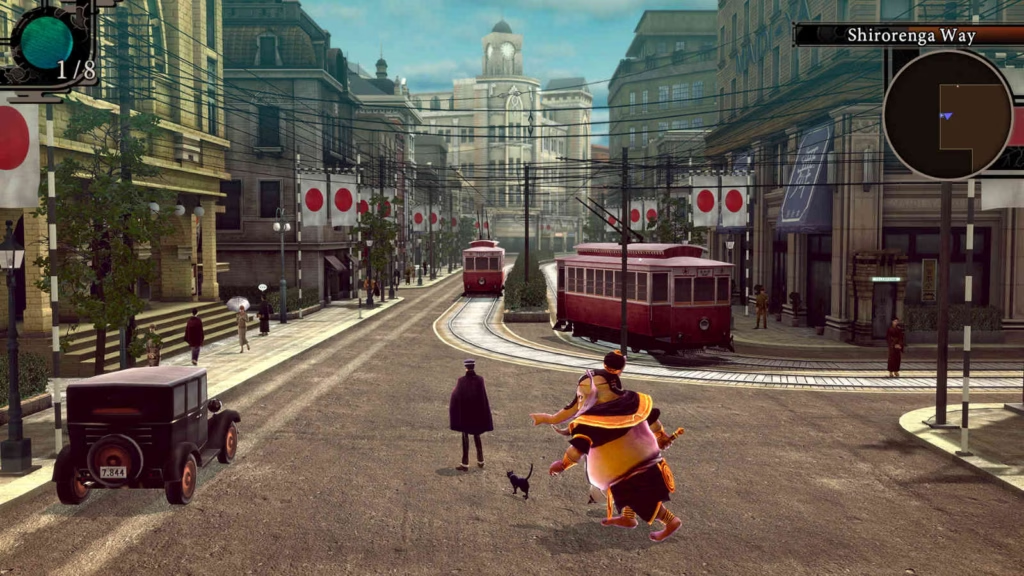
Raidous gameplay is more or less split into two parts. There is the mystery-solving detective part, and then there is the dungeon-crawling combat. Let’s focus on the detective first. Working for the Narumi Agency has Raidou visit multiple locations, talking to witnesses and piecing together the facts. If that gives you an Ace Attorney-like vibe, then I am sorry to disappoint you. For the most part, solving mysteries simply boils down to “see that marker? Go to it.” Along the way, you can call on your demons to help you solve little side quests (called “Case Files”) for extra cash and items. An early, and admittedly rather weird, case file is you helping an elderly man across a busy road. How do you do that? Well, if you have a demon in your party with the “Force” affinity (more on that later), you can opt to simply knock the old geezer across the road. Hey, as long as he pays up, right?
So if the “detective” gameplay is a little meh, how about the rest? Well, I am happy to inform you that, while the game clearly comes from a different era of game design, and no, the combat doesn’t quite hold up to contemporary games, it is really fun! During specific parts of your investigation, Raidou will enter the Dark version of whatever district he is in. Her,e demons roam the world, and everything is out to get you. However, being a devil summoner gives you all the tools you need to take care of the threats, because you can capture and summon demons. When you enter combat, you immediately summon two demons to fight alongside you. At this point, unlike basically any other SMT game, you engage in real-time action combat. Raidou can unleash a flurry of attacks. Basically, he has a basic light and heavy attack. He can pull out his gun and fire bullets a enemies, as well as use some special elemental moves. These elemental moves have a chance of triggering an enemy’s weakness, which temporarily stuns them, allowing you to unleash your attacks uninterrupted. This is where picking the right demons is key. Because demons primarily use affinity-based attacks. They heal you, they cast spells like Agi (fire), Bufu (Ice), etc., thereby stunning enemies, allowing you to capitalize on the situation.
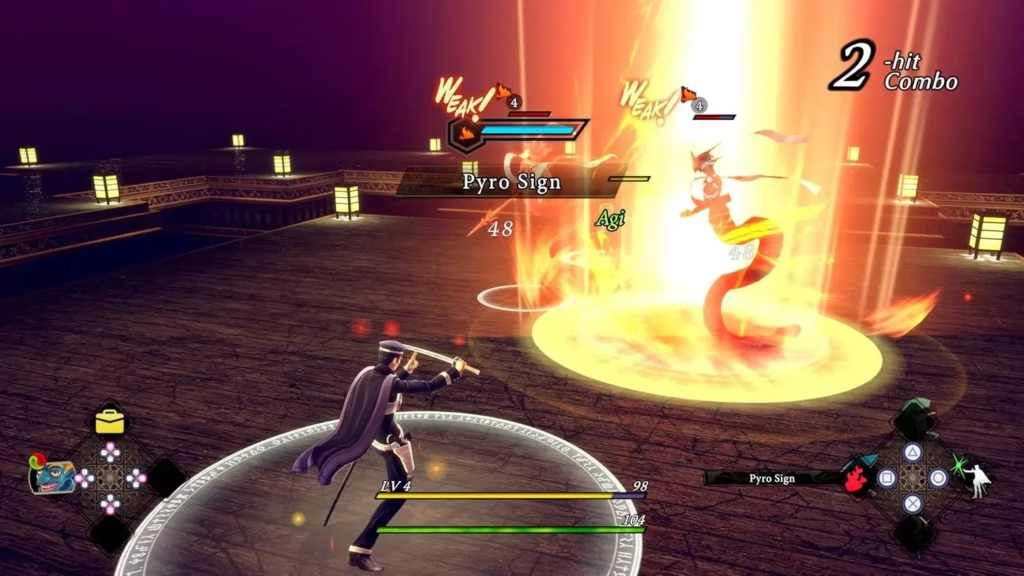
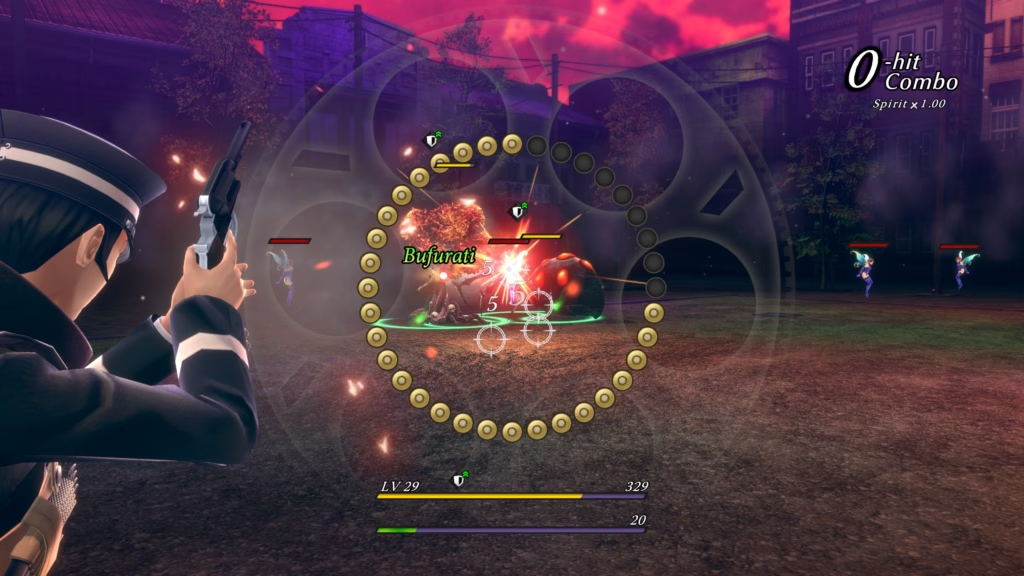
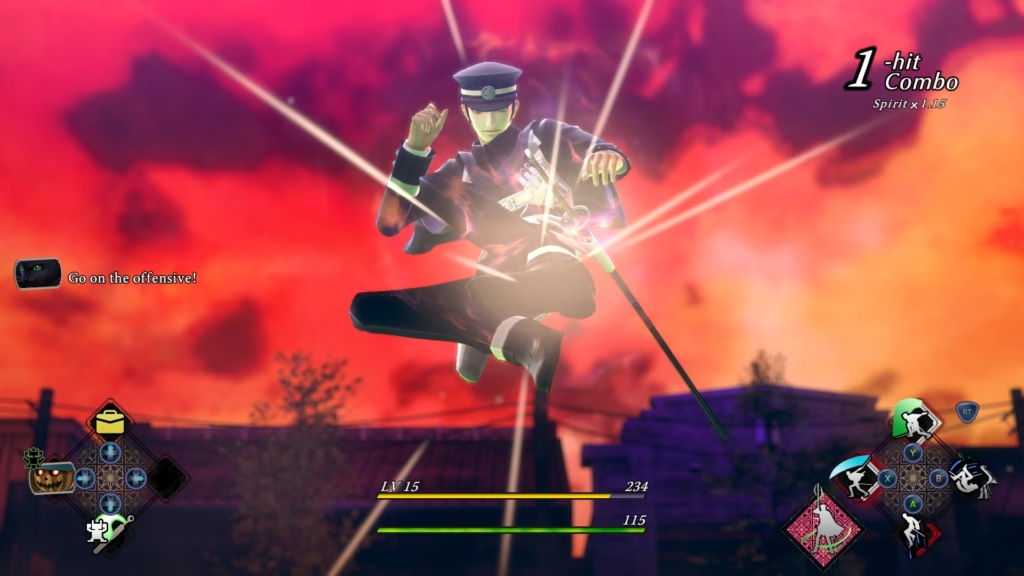
Using elemental attacks uses up your “MAG”, basically this game’s mana meter (the green bar in the pictures above). To replenish this meter, it’s important to utilize basic light attacks, and thus begins a satisfying gameplay loop of hitting weaknesses and following it up with a barrage of attacks. To add another wrinkle of complexity to all of this, the game has a dodge mechanic that lets you deal a significant amount of damage to the enemy while also replenishing a large amount of MAG. Furthermore, over time, you charge up a spirit gauge, which allows Raidou to perform a large AOE attack, which usually wipes out all enemies in one hit.
Yes, it’s all a bit simplistic, but in the context of where this game comes from (the original was widely shunned for its poor combat), it’s a major improvement that goes beyond a simple remastering. Purists may be unhappy about this, but given the joy I feel while playing this game, I feel it was the right move.
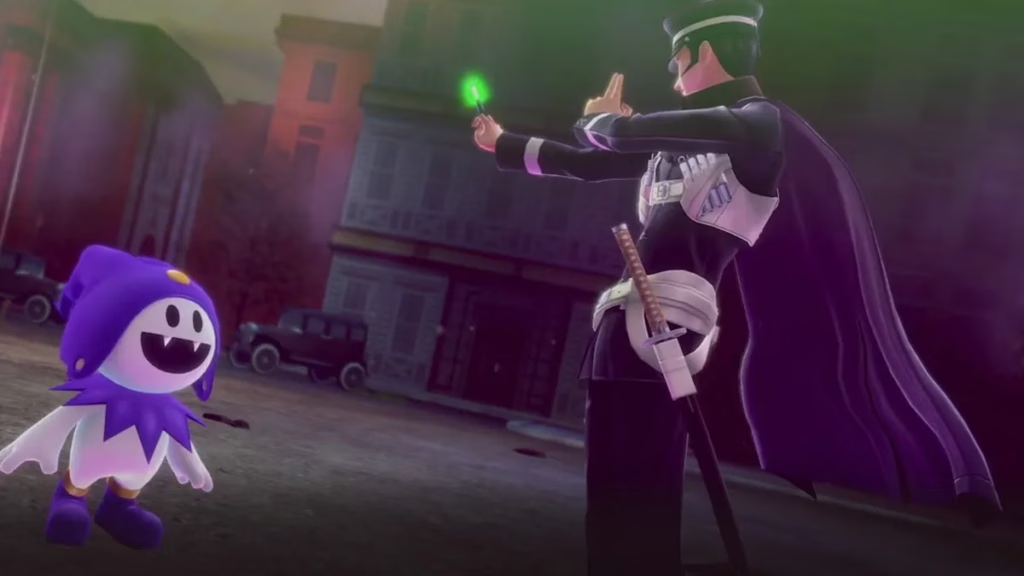
Just like any SMT game, a major component of this game is to capture and fuse demons. Two demons can be taken into combat at a time and can be switched out on the fly. Success in combat largely depends on having these powerful companions by your side. They gain experience and skills/abilities just like Raidou does. However, the growth of individual demons can only go so far, and eventually, they will be outpaced by the newer demons you come across. That’s where the fusion aspect comes in. See, you can regularly visit this place called the “Goumaden”. Here you can adjust and fuse your demons. Fusing demons is exactly what it sounds like: two demons leave your party, and (hopefully) a more powerful one emerges. Thankfully, this is not a random mechanic; you always know what the resulting demon will be, and it can even inherit some of the skills of its “parents.”
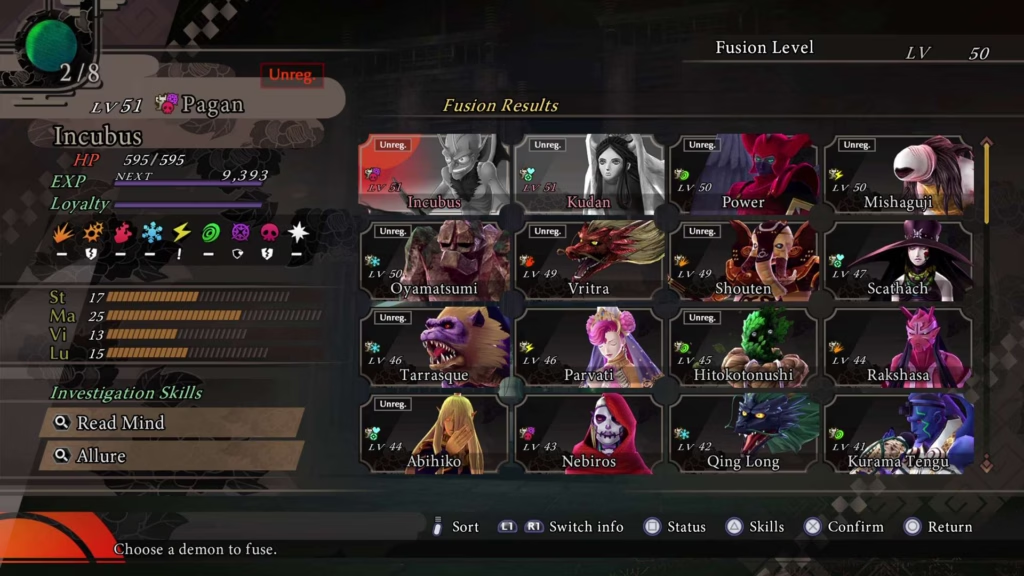
At first, admittedly, letting go of demons you feel comfortable with is difficult. You do develop this odd bond with them as a player, and getting occasional presents from them actually strengthens this feeling. But ultimately, if you want to succeed, you need to fuse. Just try not to tear up when, after the fusion, you are handed a “tearful letter.” Those bastards…making me feel guilty till the very last moment.
A solid remastering that runs without any issues
Raidou is not the most beautiful game. The PS2-era SMT games are fairly dark. In my opinion, they are also maybe a bit too dark from a visual perspective. This game, being a remaster, doesn’t change this too much – and it honestly shouldn’t! Shin Megami Tensei had a depressing vibe back then, and there is no reason this should be changed now. Especially in the case of Raidou, which isn’t all too depressing. So instead of changing the visual flair, what does this remaster even do? Well, from a graphical perspective, aside from a resolution bump and a frame rate improvement, not all too much. But that is fine in my eyes.
One area where the game massively improves on the original is in its audio production. With very few exceptions (mostly around side-quests), the game is fully voice-acted! Sure, Raidou himself is the classic SMT-silent protagonist, but the rest of the cast is stellar! And, as the icing on the cake, the pacing between sound bites feels very natural. You know what I mean. A character will usually say exactly what is written in the voice bubble, but the transition from bubble to bubble takes forever, leading to a very slow dialogue delivery. Thankfully, this is not the case here!
The Switch 2 factor: Yes…I bought a Key-Card game.
Much has already been said about key-cards. If you’re not familiar, these are basically physical cartridges that only contain the license to play a game. Upon putting the game into the system, a digital copy of the game is downloaded, and your cartridge only really serves to authenticate whether you actually have the game or not. It’s kind of the worst of both worlds. You take the annoying aspect of having to switch out physical cartridges between games, and pair it with not actually owning your game because you are dependent on Nintendo’s servers. Now, to their credit, Nintendo may have shut down older stores in the past, but they still let you download games you have already purchased. Now, I am not going to lie…I still dislike the ol’ key-in-a-box system (which has existed for a lot longer at this point) more. But I would urge consumers to think long and hard if they want to purchase these kinds of games. I personally waited for a deep (very deep in this case) sale before going for a Key-Card game. My recommendation: just buy it digitally. You don’t own the game either way, but at least this way you can appreciate some of the benefits of digital games. If you desperately need a physical edition of the game, you can go for the Switch 1 version.
Verdict: a competent recreation of a niche SMT game
No, Raidou does not blow me away. There are other, more mechanically adept SMT and Persona games, and the detective gameplay ultimately amounts to just following the objective marker. There is no finesse, no real puzzle solving or anything – that’s a bit of a shame. However, I found the combat to be very entertaining, albeit a little on the simpler side. If you think you’ve already experienced everything the SMT franchise has to offer, I highly suggest you check out Raidou Remastered: The Mystery of the Soulless Army. Despite its occasional flaws, I just could not put it down!