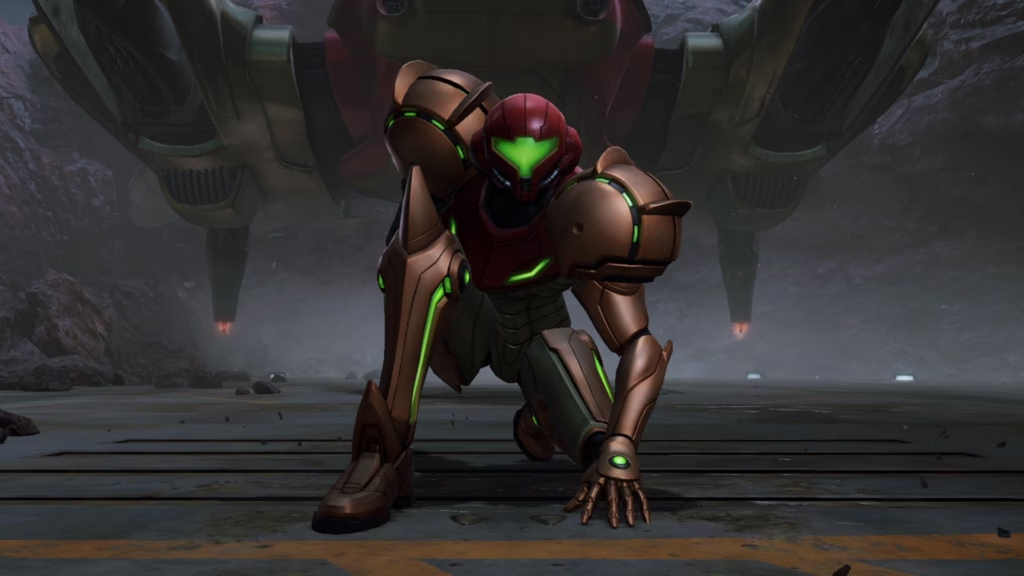
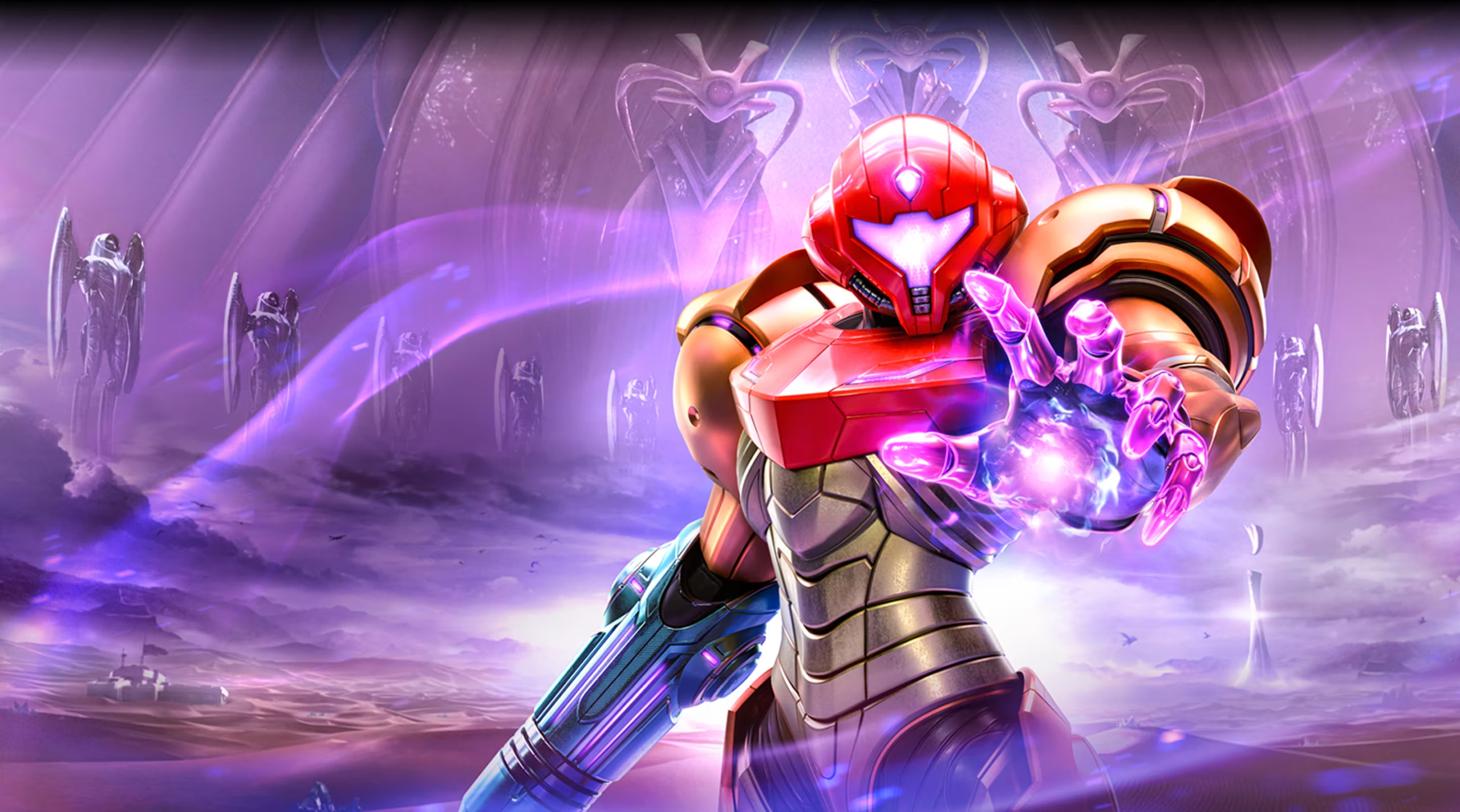
The Metroid series means a lot to me. In fact, my excitement for the second game in the Prime series (Metroid Prime 2: Echoes) was the basis for the username I use on just about every platform. Some of my fondest memories involve playing through the Prime games on my GameCube, and engaging in what was effectively Nintendo’s first online shooter in Metroid Prime: Hunters. You can imagine my feelings when in 2017 Nintendo announced that Metroid Prime 4 was in development. And while I may not have been particularly excited about the delays and the dearth of information since that announcement, I comforted myself in believing it would all be worth it when the game does finally release.
Well, the game is finally here, and on Nintendo’s shiny new console! So does it live up to the 18-year-long hype? Is this a Metroid game through and through? Let’s dive in.
And the Story Continues
Metroid Prime 4 Beyond continues the story laid out by Metroid Prime 3 Corruption, which featured a teaser showing the bounty hunter Sylux following Samus’s ship in space. Prime 4 opens with Samus being called to a galactic federation facility that is currently being overrun by Space Pirates led by Sylux. Over the course of this initial battle, which serves as a type of tutorial for players, an ancient alien artifact is activated, causing Samus and her surroundings to be teleported to a new world: the planet Viewros.
It is on Viewros that Samus learns of the ancient race of the Lamorns. An extinct race that, through video messages, informs Samus of their dying-wish: that the chosen one (Samus obviously) would gather the collective thoughts and memories of the Lamorn, take them to a safe location to preserve them for good. So that the Lamorn shall never be forgotten. To aid her in that task, the Lamorn grant her psychic abilities so that she may manipulate her environment and tackle the challenges she will have to face. After all, since the Lamorn are long gone, there would be no one to aid her. No one? Weeeeell….

For the first time in the series, Metroid Prime 4 Beyond features fully developed NPCs that join Samus on her adventure. Sure, Corruption had some NPCs as well, but by and large, they were a side aspect of the story. In Prime 4, they are quite a substantial part of the experience. These NPCs (such as the infamous Miles McKenzie depicted above) will follow Samus for some parts of the game and assist her in several ways. Either by providing advice, helping to open doors, or just plain extra firepower. While I, and seemingly the majority of the Metroid community, find these tips and hints given by the NPCs to be detrimental, I did get to see some of my friends play this game as their first-ever-Metroid, and they did appreciate the hints.
That said, while these NPCs do serve a purpose, they feel very out of place in a Metroid game. I do not think that NPCs should be avoided at all costs; the execution matters greatly. In this case, the NPCs range wildly from annoying to uninspired, but ok. From Nora Armstrong, a likeable young rookie who introduces herself by fangirling over Samus (I mean, who wouldn’t?), to Miles, who feels out of place with his regular attempts at cracking weird Marvel-esque jokes. Generally, I have no issues with Nintendo beginning to open up Metroid as a franchise. It’s fine for a series to evolve and mix up the formula. After all, I was the Prime series that moved the franchise to 3D in the first place. However, while I am generally not upset by their inclusion, I do hope that future Metroid games refine how they are integrated.
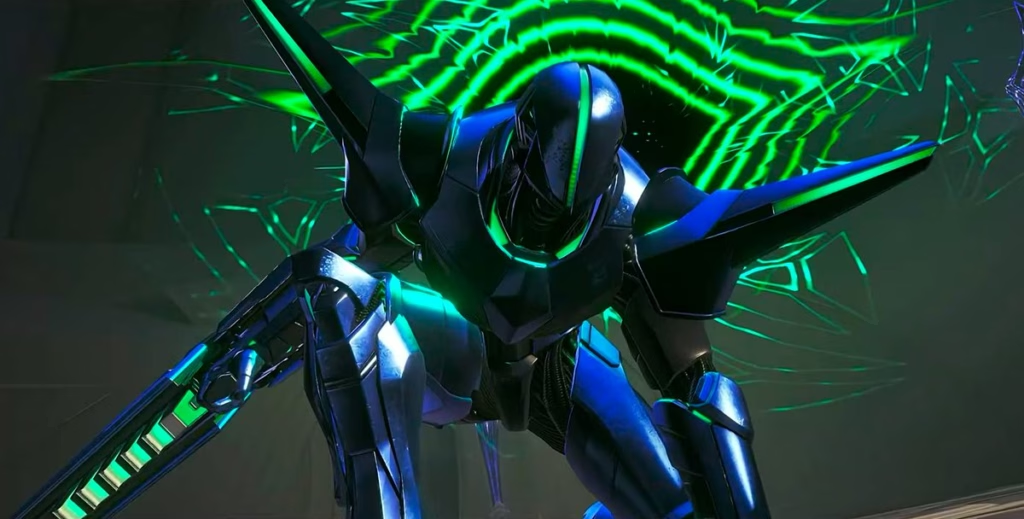
All this leaves the story in an interesting place. The premise is excellent, and I legitimately had a lot of fun reading up on the Lamorn. I was very motivated to help them secure their legacy and return to my home planet. I also kind of liked them trying to introduce more characters and attempting to flesh out Sylux as a villain/rival to Samus. The problem with the latter part is the execution. I often felt like the developers were not sure if the game should lean more on the classic isolationist type of gameplay or fully embrace the variety of characters. The result feels a little uneven, but thankfully, it sticks the landing with an ending that I felt was emotionally rewarding and left the door for a sequel wide open.
Bringing Metroid into the 4K-Era
Metroid Prime 4 Beyond was released as both a Switch 1 and a Switch 2 game. Typically, games that receive a dual release treatment have some drawbacks to accommodate the weaker Switch 1 architecture. That said, Prime 4 may be the most impressive first-party visual experience on Switch 2 (Cyberpunk 2077 is still king). The game oozes quality with an incredibly fluid 4K mode that runs at a rock-solid 60 frames per second. And if that is not enough for you, there is an optional performance mode that outputs at a respectable 1080p resolution but reaches 120 frames per second.

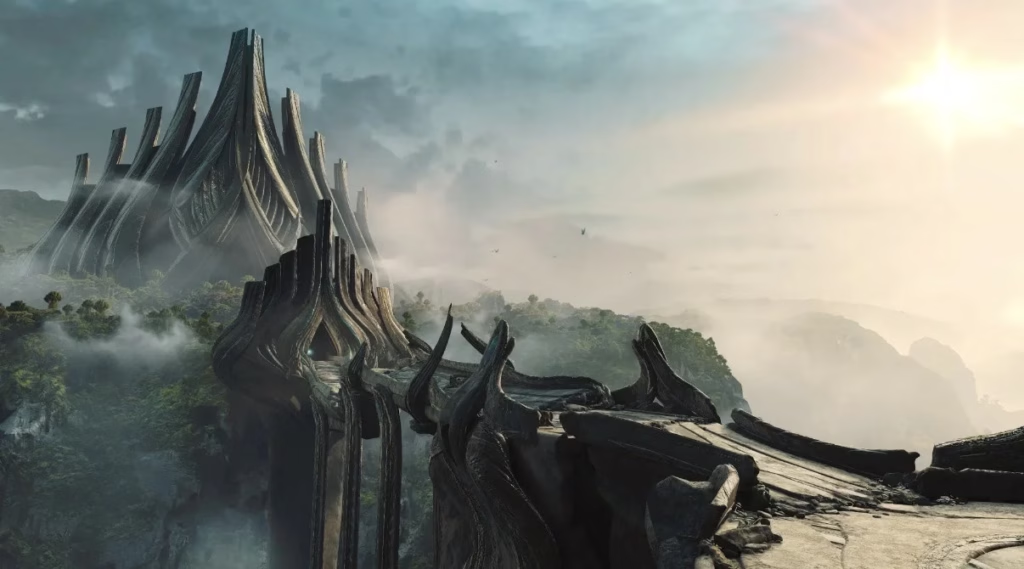
Now, all those numbers would not be particularly impressive if the game looked horrible. But thankfully, Retro Studios has employed some incredible artists to bring Viewros to life. From the lush green forest of Fury Green, the unforgiving tundra that is Ice Belt, to the harshness of the desert, Metroid Prime 4 Beyond boasts some truly spectacular vistas. Given the improved hardware of Switch 1 and 2 compared to the series last entry on the Wii, Retro Studios introduces these areas in ways that feel both cinematic and mysterious. Take a look for yourself:
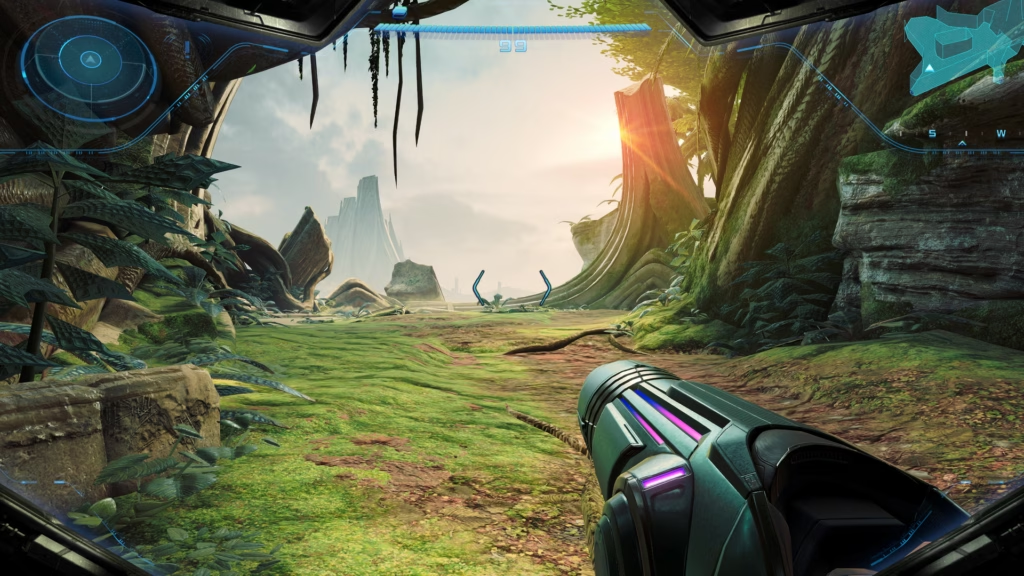
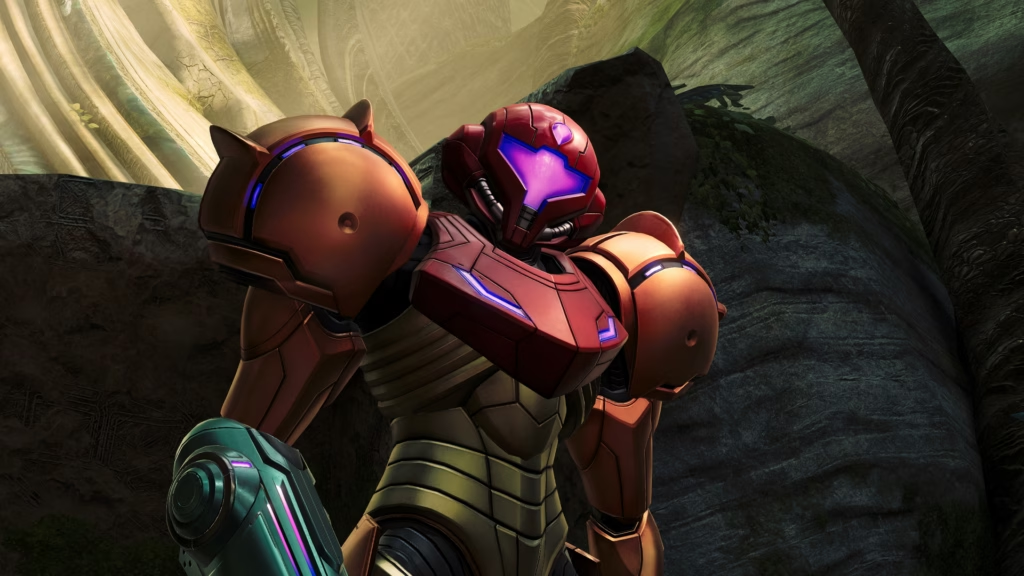
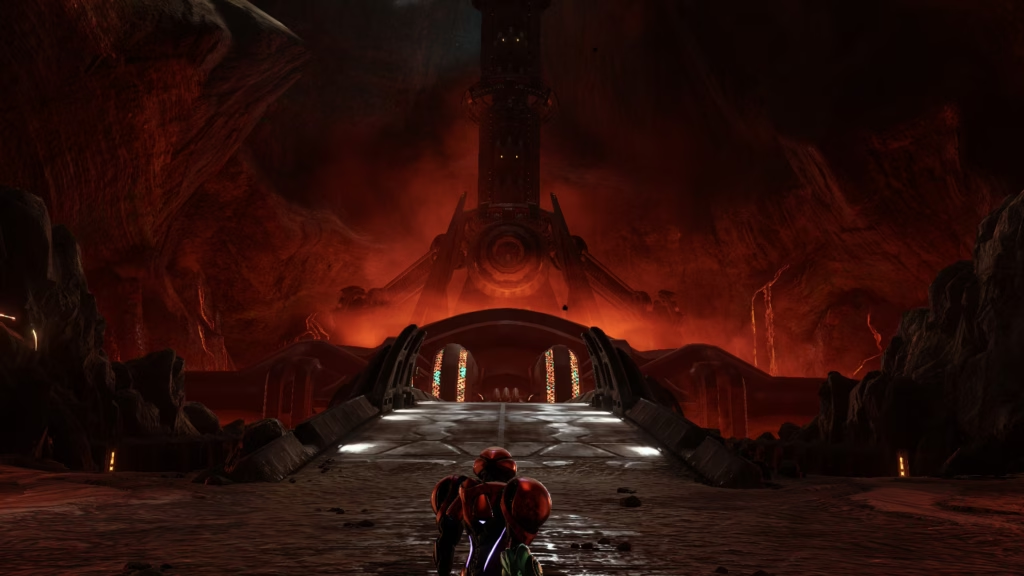

If there is any gripe I have with the visuals, it’s in the texture department. This game clearly started its life on the original Switch and was later ported to the Switch 2. As a result, some textures and environments can feel fairly simplistic. It’s only a minor gripe, though, in a game that consistently provides visual eye-candy.
I would also take the time to mention the game’s music. Metroid games, especially the Prime games, have always had a killer soundtrack that perfectly pairs with the environments they accompany. Especially the first Metroid Prime game comes to mind, with its dark, brutal Magmoor Caverns track, and the mysterious light tunes of Phendrana Drifts. Prime 4 continues this legacy with a soundtrack that, while maybe not quite as memorable as the original game, still holds its own well.
It is Time to Experiment
Gameplay is king. So what do you do with a series that has some of the tightest gameplay of the genre? How do you build on top of that, without alienating your audience by moving away from what made the series so lovable in the first place? Let’s take a look at Prime 4 from the perspective of what it brought over from its predecessors and the new additions.
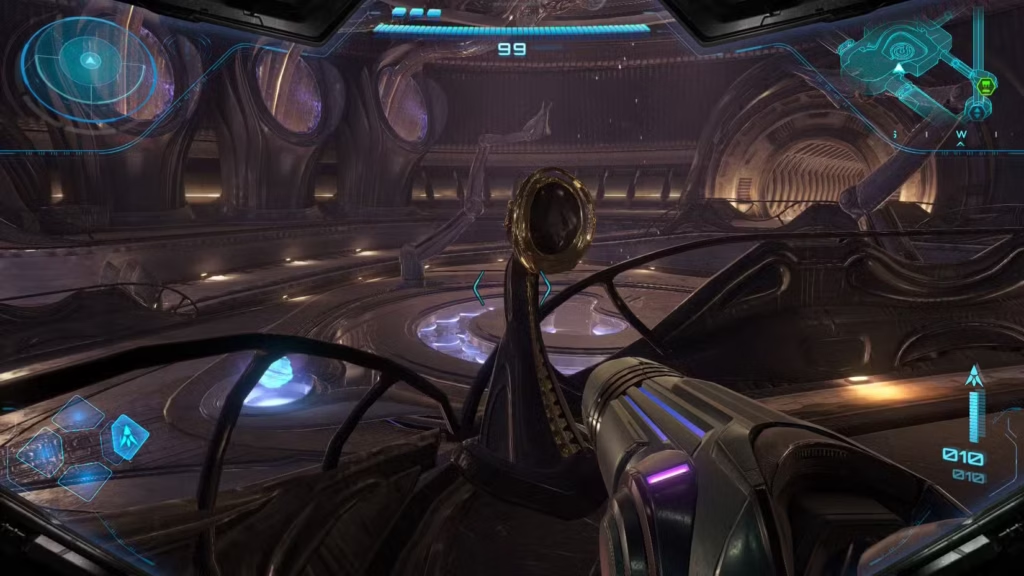
At its core, this is Metroid Prime through and through. As Samus, you will be exploring the world, gathering items and abilities, missile tank expansions, and suit upgrades to unlock new areas to traverse. In classic Metroidvania fashion, you have a world of different corridors and rooms to explore. Certain doors, or secrets, may require you to return at a later point, with an ability that you will unlock somewhere down the line.
This highlights one of the core keys-to-success for any Metroidvania game: map layout. And sadly, this is where Prime 4 falters a little compared to other games in the series. Rooms and corridors still have plenty of secrets in them, and there is some classic Metroidvania-style backtracking, but the world feels much more linear than it has ever been before. This may be an attempt at easing in newer players to make it more accessible. But by doing that, I feel they may have gone a step too far in leaving those of us who are looking for a more intricate map layout behind.
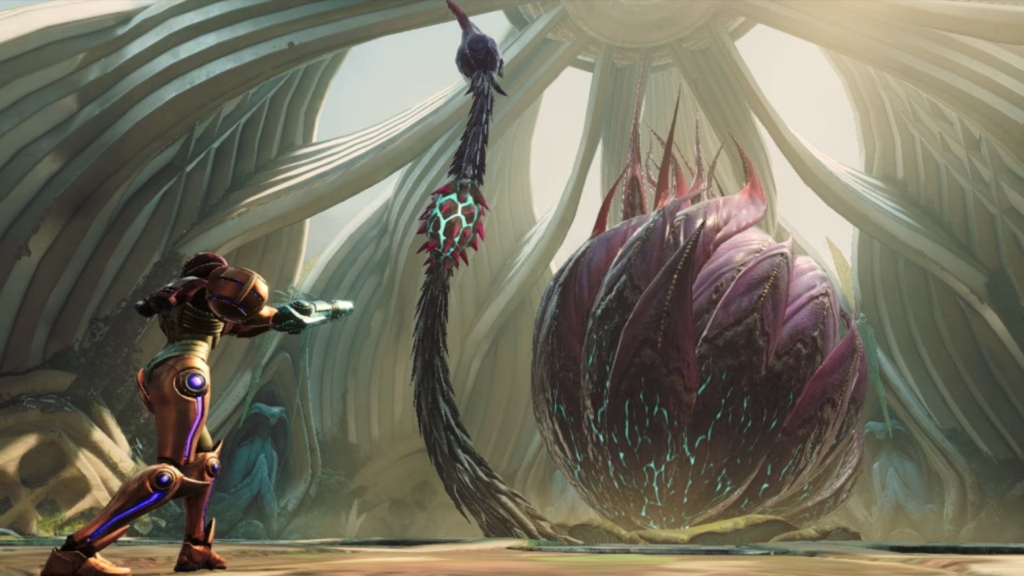
Put this game side by side with the Meroid Prime Remaster, and you can tell just how close Prime 4 tries to stick to the originals. Put simply, this works really well. It’s fun to run-and-gun from room to room while making sure you scan everything and take mental notes of items you may be able to obtain later. The linearity of the game is a bit of a shame, though not a dealbreaker for me, as I found the different biomes I got to visit thoroughly enjoyable nonetheless.
So while Metroid Prime 4 Beyond largely nails what was laid out by the previous games, the same cannot be said for its newest additions….
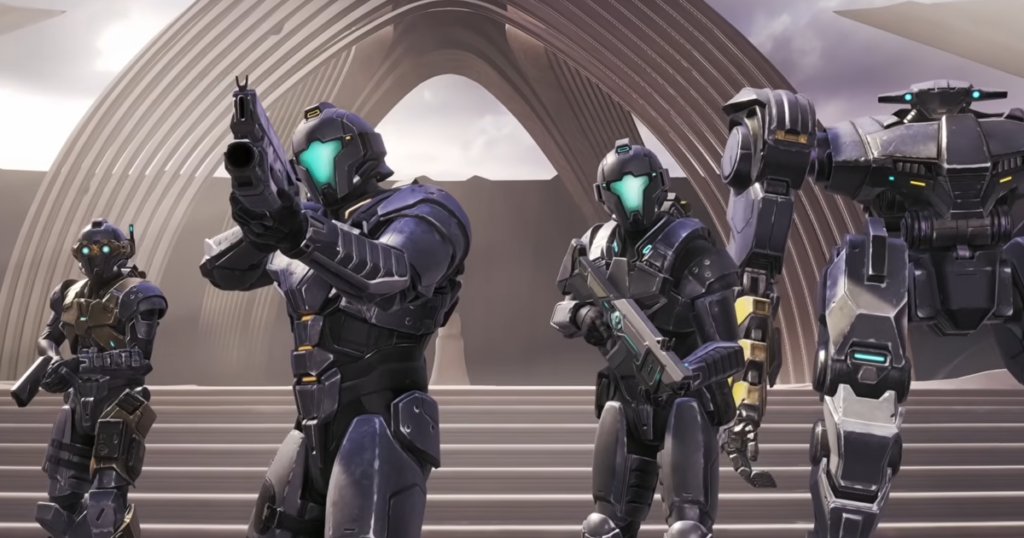
As mentioned before, this time around, Samus is joined by some NPCs. While the internet seems to have largely made up its mind about them, I personally am still a little torn on them. On the one hand, I like that Retro Studios is opening up the franchise by introducing some more interactions between Samus and the Galactic Federation. I also like some of the characters, especially the dynamic some of these NPCs have amongst each other. On the other hand, there is one NPC that routinely annoys me with his incessant desire to tell me where to go, what to do, and crack one joke too many. The problem with them, though, is that the NPCs don’t really do all too much from a gameplay perspective. The only notable thing, aside from the occasional extra gun they bring to a firefight, is that many suit upgrades have to be equipped by our favorite technician, Miles McKenzie. Resulting in an unnecessary extra step that I would not have minded skipping.
As always, execution matters greatly. I think that by and large, Retro Studios did an ok job introducing a new roster of characters from a narrative perspective. But they fumbled on Sylux. A villain who is barely felt throughout the entire adventure until his very sudden appearance towards the end of the game. It’s all done rather hastily and amateurishly. It’s very un-Retro-Studios-like, and I hope that when the next game comes out, more care and attention are given to making the characters feel more natural and properly integrated into this world.
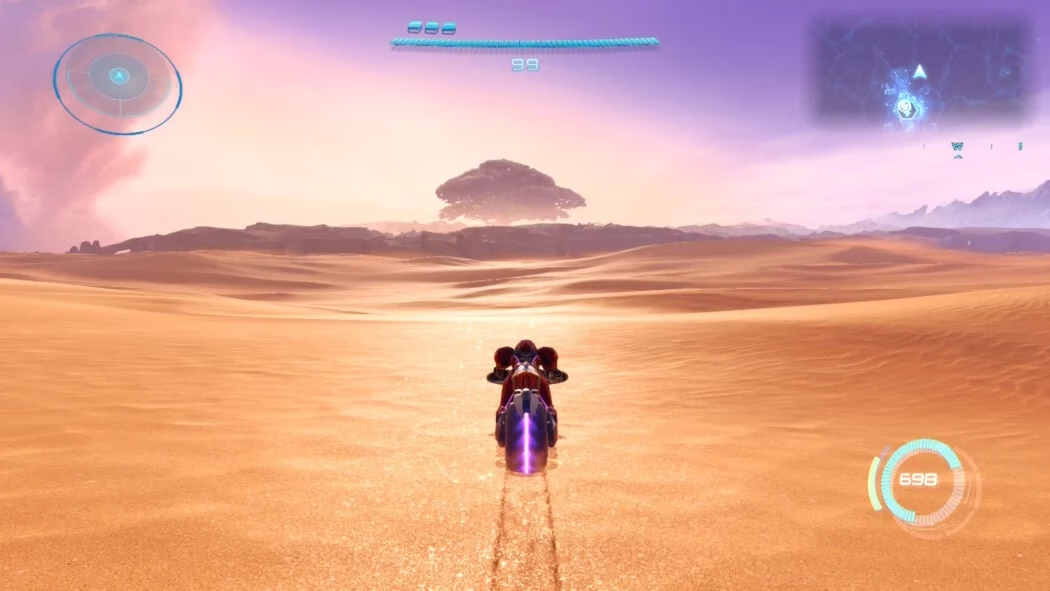
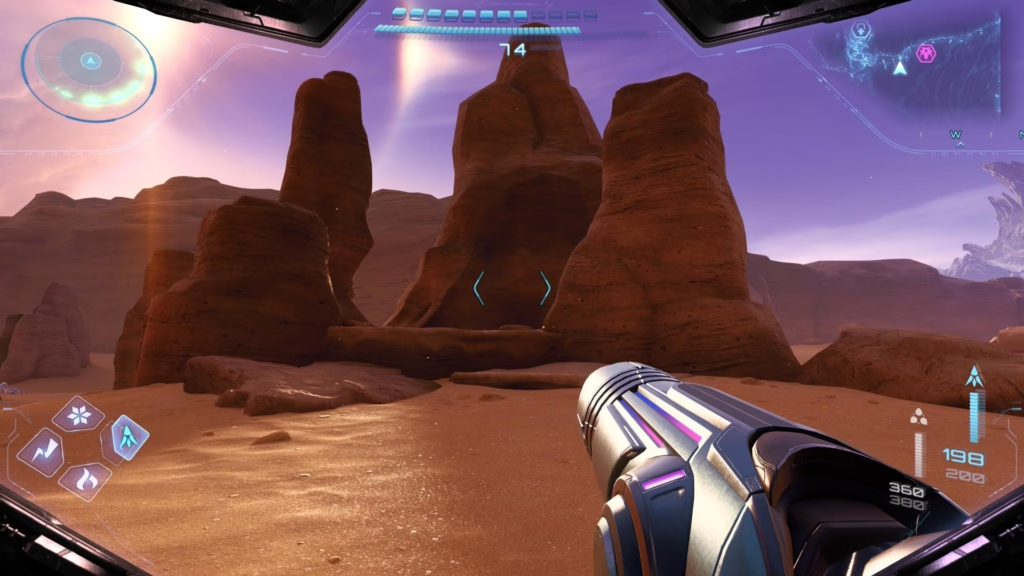
The second big addition is the open-world aspect of the game. For some inconceivable reason, Retro Studios decided not to connect the biomes via connecting rooms, hallways, elevators, or gondolas like in previous games. Instead, they opted to place these biomes at the far ends of a giant desert. And just like a real desert, there really isn’t that much going on here. There are some ruins, each containing a mini-puzzle, to explore, but by and large, this desert is just empty. Thankfully, you do not need to traverse it on foot.
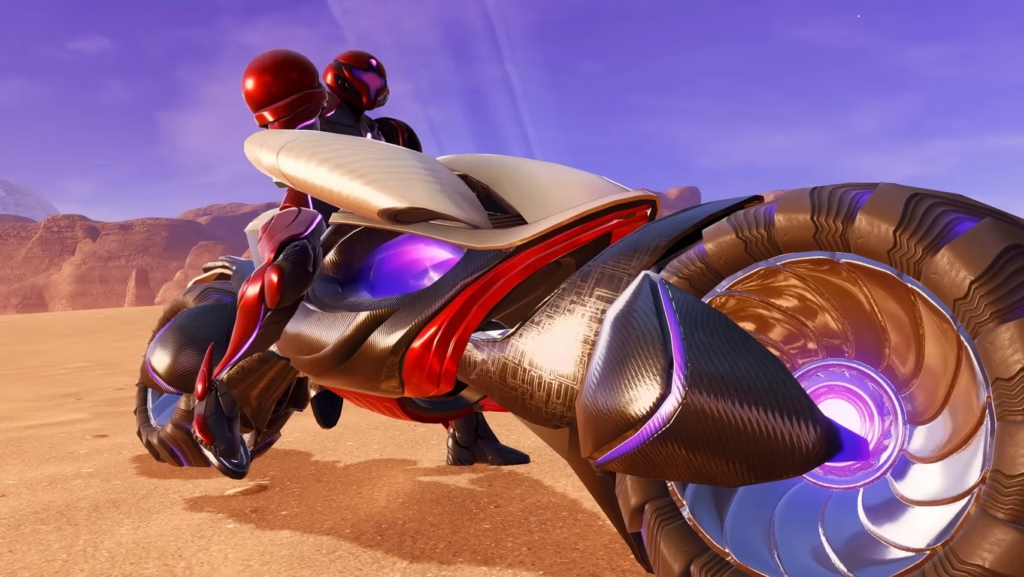
After just a few hours, Samus will get access to Vi-O-La, a Lamorn bike that lets her race through the desert with ease. Vi-O-La is equipped with weapons to fight pesky enemies, a boost, and can drift as you would in Mario Kart. However, aside from being a faster travel method, Vi-O-La serves a larger purpose. See, the Lamorn want Samus to collect these green shards, which are found across the desert. These shards supposedly hold key Lamorn memories, and by finding all of them, Samus will be able to save their species legacy.
This narrative element is the cause of one of the bigger gripes I have with the game. While I must admit that driving around the desert with Vi-O-La is a good deal of relaxing fun, it is inherently tied to an old-school fetch quest because to finish the game, players must collect just about every single green shard in the desert. It’s just such a shame that a game that otherwise is crafted with such care and detail knows nothing better to do with its open world than to drop a bunch of green shards into it and tell the player to find them all. Rivetting.
Not Quite Beyond
Metroid Prime 4 Beyond had a very difficult task. It’s been in development hell for the last 7,5 years, and it has been 18 years since the last numbered entry. Of course, fan expectations were high, maybe a little too high. Games that go through this kind of development cycle typically struggle to be good. In that sense, I am happy to say that this game is indeed very good. However, it feels like for everything the game does right, there is always a slight but…
The game boasts an intriguing and well-told story, but the integration of the Galactic Federation and Sylux as the main antagonist was clumsy at best. The gameplay at its best moments surpasses that of even the original Prime Trilogy, but the game also forces players to go on a mundane fetch-quest in a literal desert, devoid of anything particularly interesting. At least in the visual department, the game is near flawless and truly a good sign of what’s to come.
Metroid Prime 4 Beyond did not disappoint me. Some elements definitely did, but at the same time, I am happy that Retro Studios tried to iterate on the series. I can live with most of the NPCs just fine, Vi-O-La is a good deal of fun, and even though the fetch quest was boring, I really enjoyed driving around with my flashy new bike. Its not perfect by any means, but still one of my biggest recommendations for people who are interested in getting into the series. Now, let’s hope Retro Studios takes note of what to improve for the next entry.