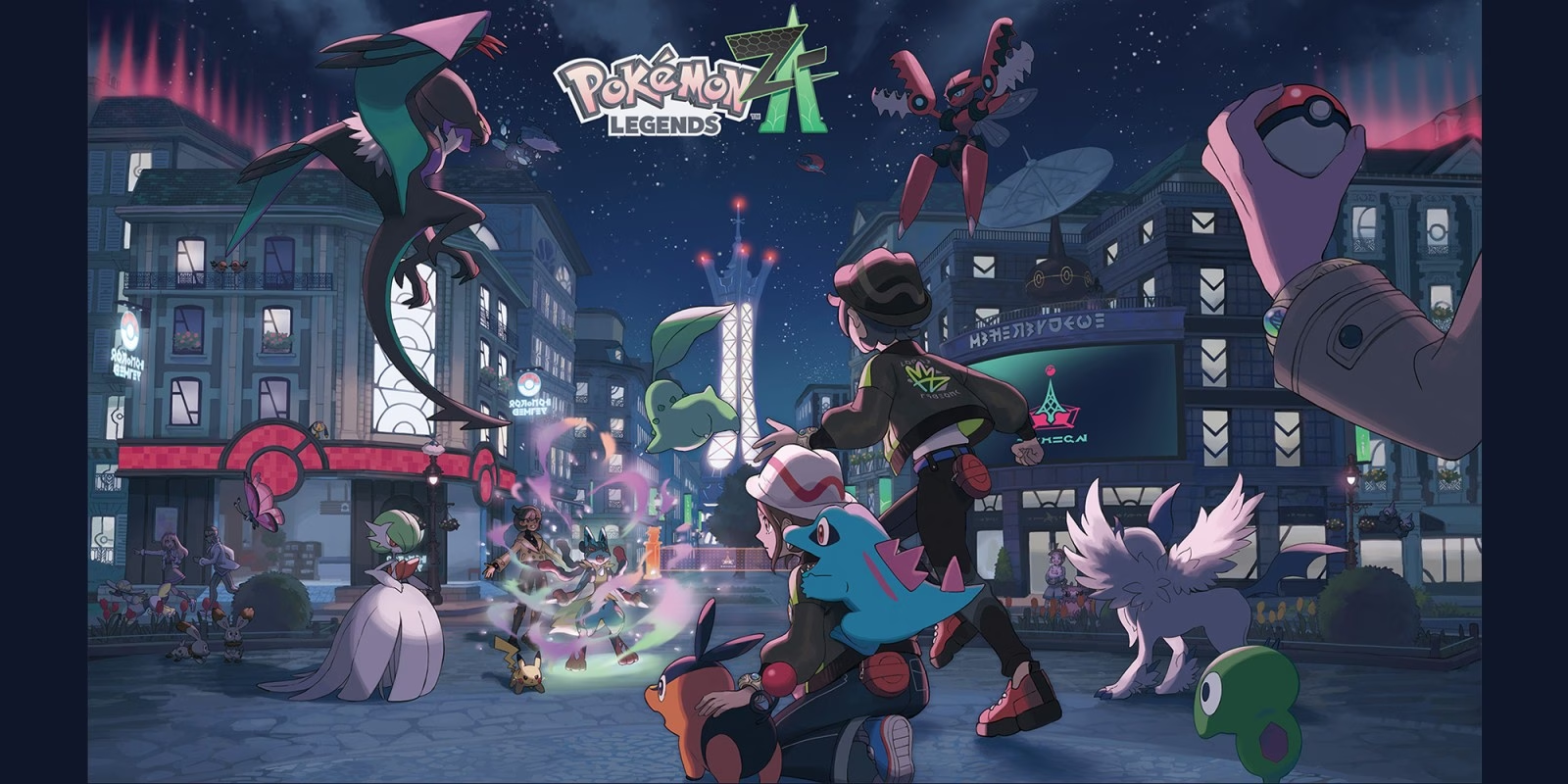
For the past month or so, my wife and I have been feeling like kids. With a new Pokémon game on the horizon, we felt overwhelmed with the nostalgia we so often feel when Gamefreak releases another one of their games. We had the special Champions Edition preordered, and we unpacked our Pokémon cards. In a way, we did everything we could to relive those glory days of our childhood. However, something changed in the last decade or so. Sure, we got older, and as the series remains dead set on appealing to the younger crowd, it is obvious that we are not their primary demographic anymore. But it is not just us that have changed, Gamefreak too has gotten lazy. But let’s talk about everything one step at a time and hop into the world of Kalos!
HD 3DS Game Remaster?
Let’s get the elephant in the room out of the way first; this game does not look like a game on a flagship Nintendo console should look like in 2025. While the opening of the game actually looks quite promising, it showcases some impressive cutscenes. At least by Pokémon’s standards. But hey, the environments weren’t overly jagged, and the framerate holds at a rock-solid 60 FPS.
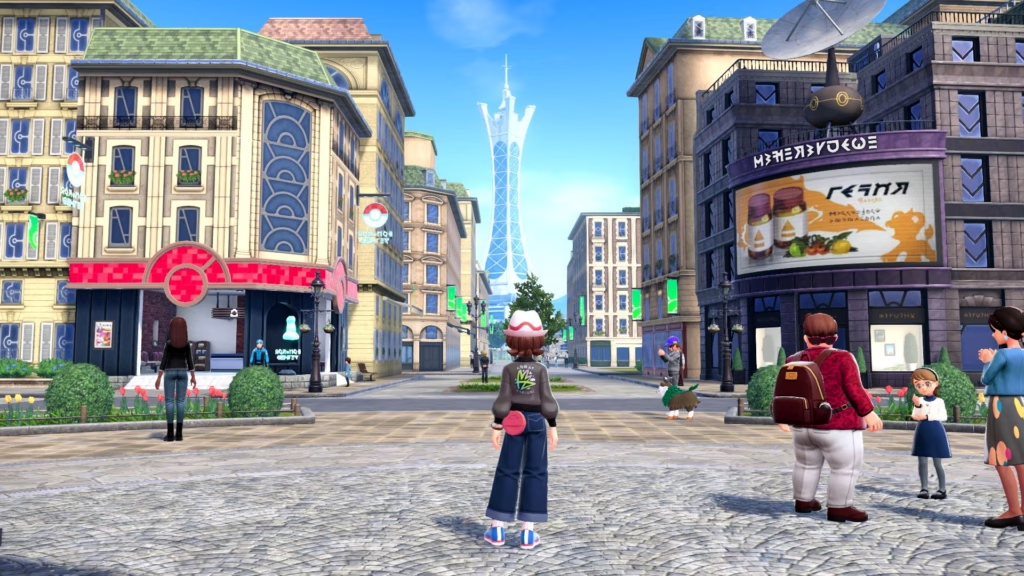
Stepping out into the world for the first time, I must admit I was positively surprised by the quality. Compared to recent Pokémon games, the visual fidelity on display here is a notable improvement. Thankfully, we do not have a Scarlet & Violet-esque situation on our hands here. However, it does not take long for the cracks to surface.
While I do not think that every game needs voice acting nowadays, there are instances where it is inexcusable. As veterans of the series know, every Pokémon game has an initial scene where the current game’s professor gives a quick rundown of why Pokémon are so fantastic. This time around, despite the animation and visual clarity being the best they have ever been, the fact that nobody is talking in the background makes the scene feel empty. This hurts especially this time around because we already have a template of how this could sound. I swear, Patty and I both had the narration from Bill Nighy playing in the back of our heads as he talks about Ryme City from the Detective Pikachu movie.
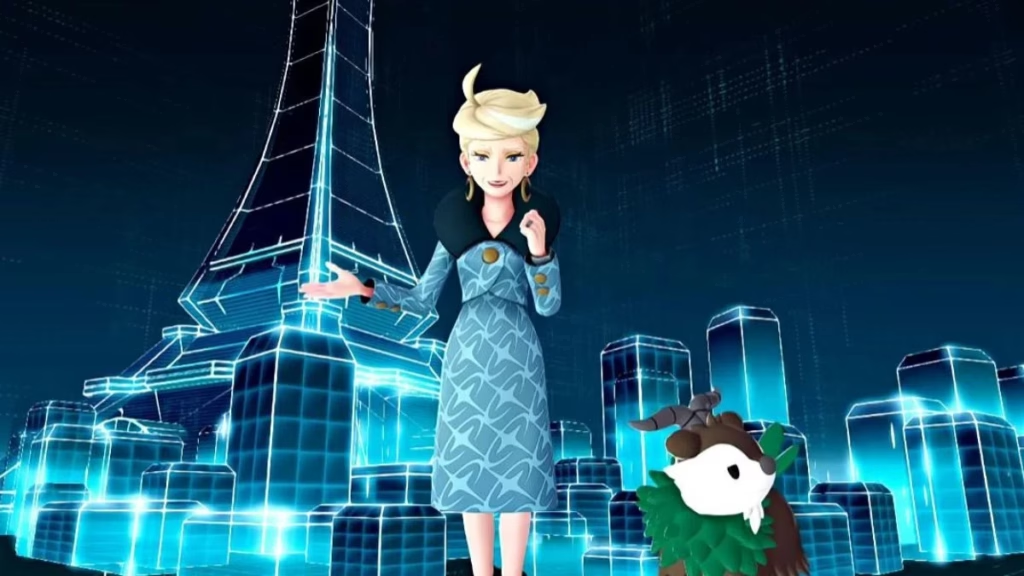
As for the rest of the game, the visuals are mostly fine. The Pokémon look fantastic, and characters have been given a little bit of a bump in quality compared to previous entries. The environments, while not nearly as bad as what we got in Scarlet & Violet, are still rather boring. This is undoubtedly due to the setting, as there is only so much you can do with building after building. But everything just looks flat. As though buildings lack textures and polygons. Buildings lack their natural shape as window sills, doors, and bricks should stick out. This time around, it’s as though every building is just a uniform block with a basic picture of a building stuck to the front.
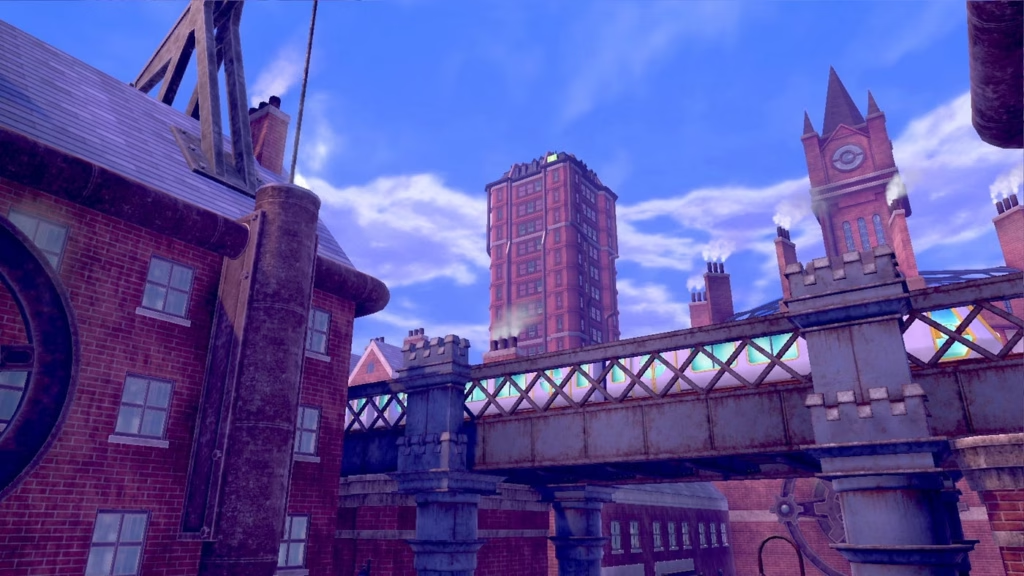
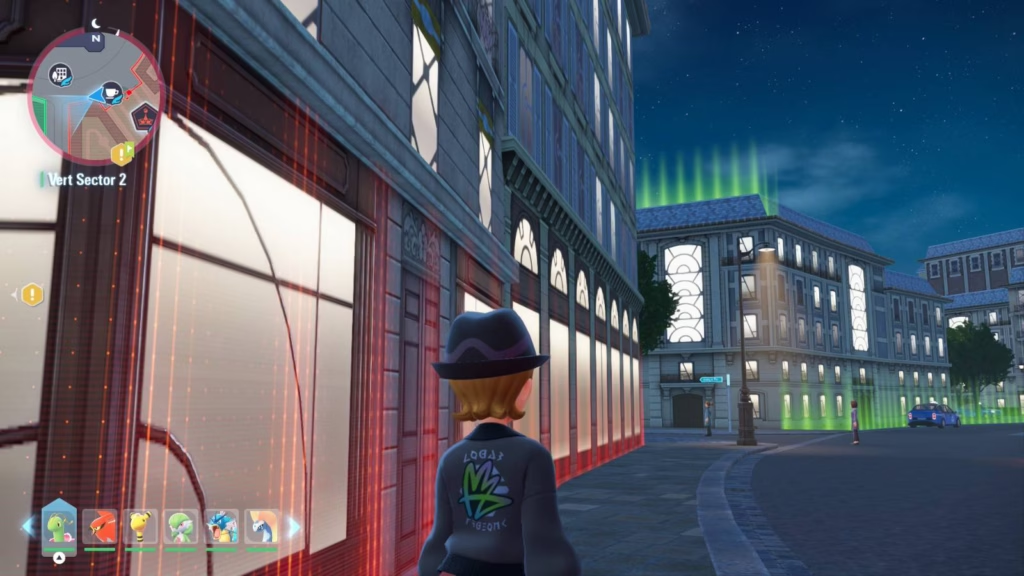
Clearly, this was done as a tradeoff to make the game perform better. While we appreciate stable performance, there is no reason why a couple of polygons, to give the game some much-needed environmental charm, shouldn’t be included.
From a visual perspective, this game feels stuck in the past. It truly feels like Gamefreak took a 3DS game (the original X & Y, where 3DS games are, after all) and just gave it a resolution bump. Don’t be misled, this is a notable improvement from previous games, but we are still a far cry away from what would be classified as industry standard. Modern game engines, in the hands of mediocre developers, can deliver much more visually appealing games. Much has been said about how it is inexcusable that Gamefreak delivers sub-par performance for the most profitable media IP in history. And we fully agree.
The Wonderful(ly Limited) World of Pokémon
For everything that Pokémon Legends Z-A gets wrong about its visual presentation, it gets a lot right where it counts most. It continues its tradition of open worlds that were truly started with the Legends Arceus. The city of Lumiose offers up quite a few locations for the player to visit, from the sprawling network of interconnected rooftops to parks and underground canals.
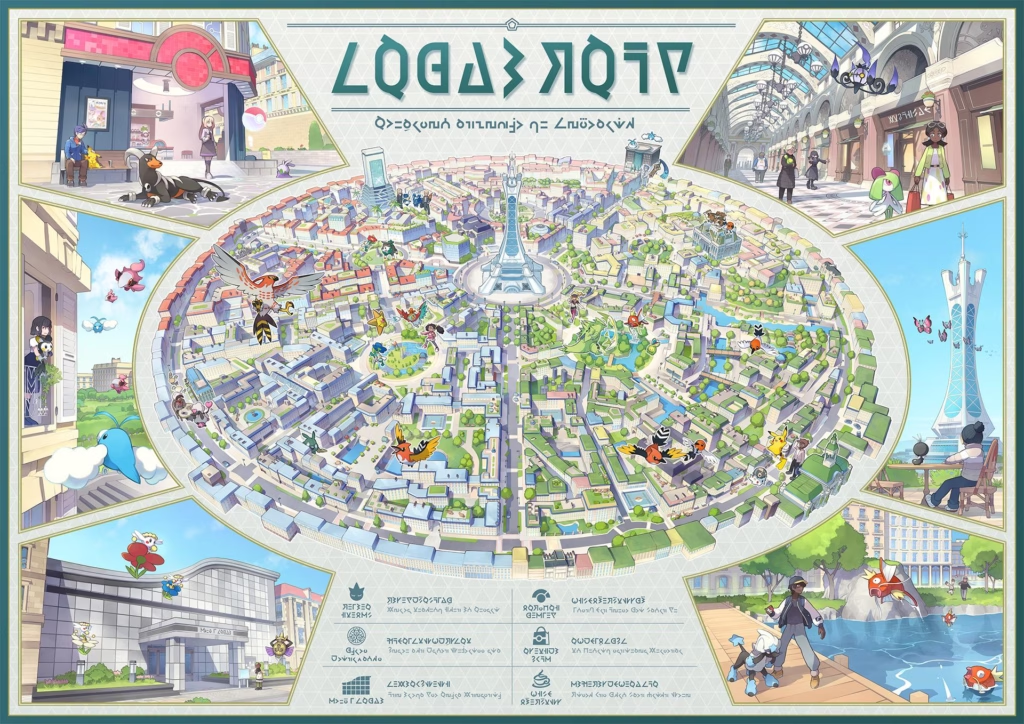
However, letting the entire open world be limited to just one city is a gamble. Can a city truly deliver enough variation and unique biomes to give players the diversity they crave from a Pokémon game? In our opinion, while the developers clearly tried to add variety, the whole thing just falls short of what we expect from these games. Lumiose is split into five different sectors (Green, Blue, Yellow, Red, and Magenta). And while the Pokémon and Zones you find in these areas are slightly different, it all feels very samey. Worst of all, the world feels small.
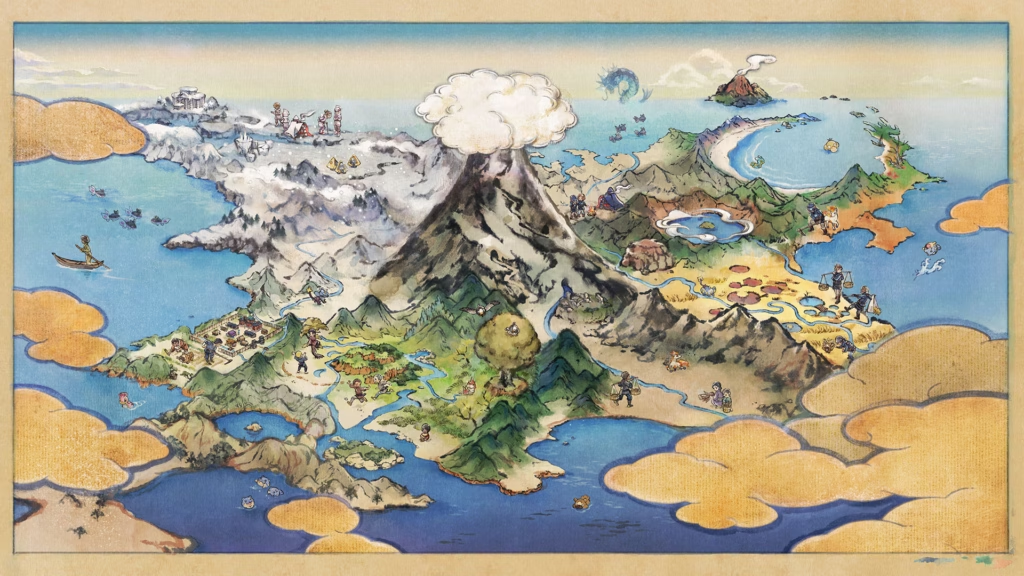
Especially when compared to the previous Legends game, which features a fully fledged world, Lumiose just does not hold up in the slightest. However, we will throw the game a bone. The Legends games are for trying out new concepts and experimenting. Basing your new game on just one big city was a gamble. One that did not pay off, but it is an interesting experiment that makes Z-A stand out from the rest.
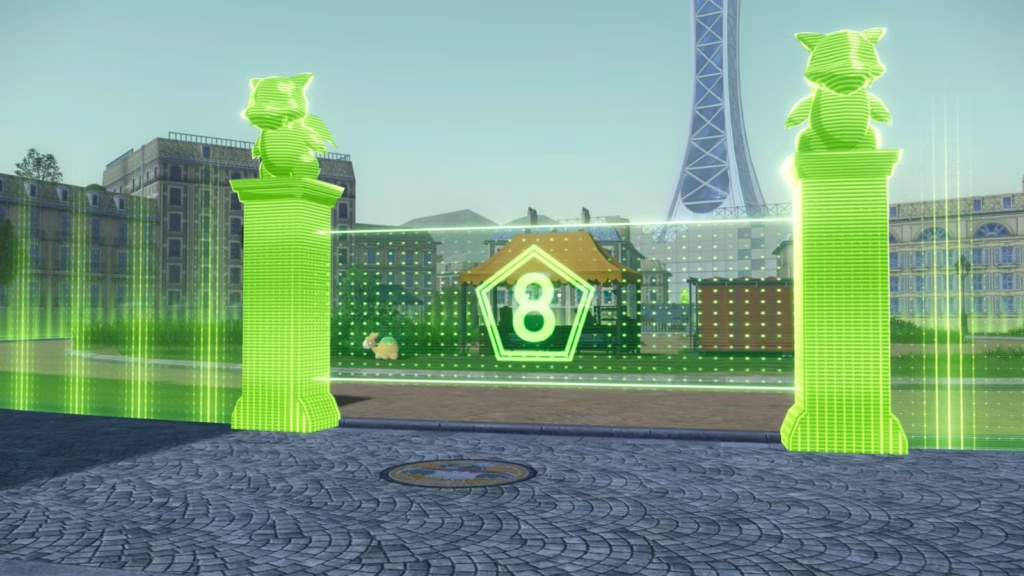
So, where do you even catch Pokémon if you are in a city? Well, the city of Lumiose has these areas called Wild Zones. By adding these wild areas, they are trying to make up for the loss of Routes for us to travel along. This was usually the way to encounter new Pokémon, right? We’d go visit a new town, and each route would have different Pokémon to offer. Or the surroundings of different cities would be Pokémon type-specific. But the wild areas, as much as they try to bring over that feeling… It’s not quite there for us yet. They could at least have the zones rotate the Pokémon they offer now and then.
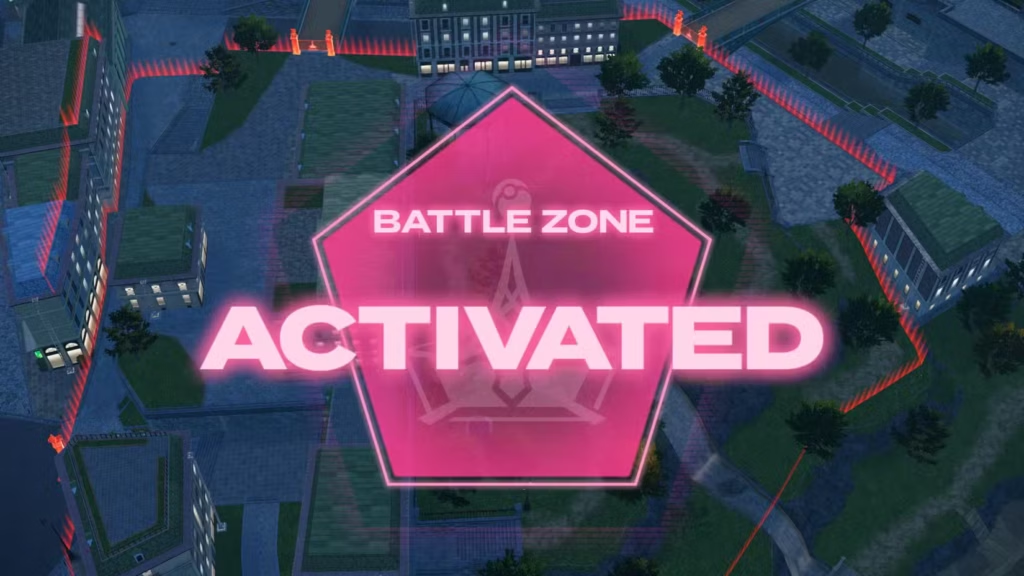
Conversely, just as Pokémon have largely been relegated to these green Wild Zones, battles against trainers happen at night in these designated Battle Zones that appear randomly every night. These areas are always filled with trainers for you to fight against. Since these zones always reset every evening, you will never find yourself lacking NPCs to fight against. As you fight trainers in these zones, you accumulate points and score multipliers. At the end of the night, your points are tallied up and you get a payout. Aside from generating an income, you will desperately need to buy items and Mega Evolution stones, fighting lets you rank up your Battle Royale rank. Speaking of the Battle Royale rank…
I Wanna Be The Very Best
The main draw of this game, the reason why the title says Z-A, is the game’s Battle Royale mode. Essentially, at night, Lumiose transforms into a haven for all trainers who wish to battle. As you battle players, you accumulate points. Collect enough points and you can participate in a promotion match. Win and you will be promoted to the next rank. Since you start off at rank Z, your goal is to make it to rank A (hence the title).
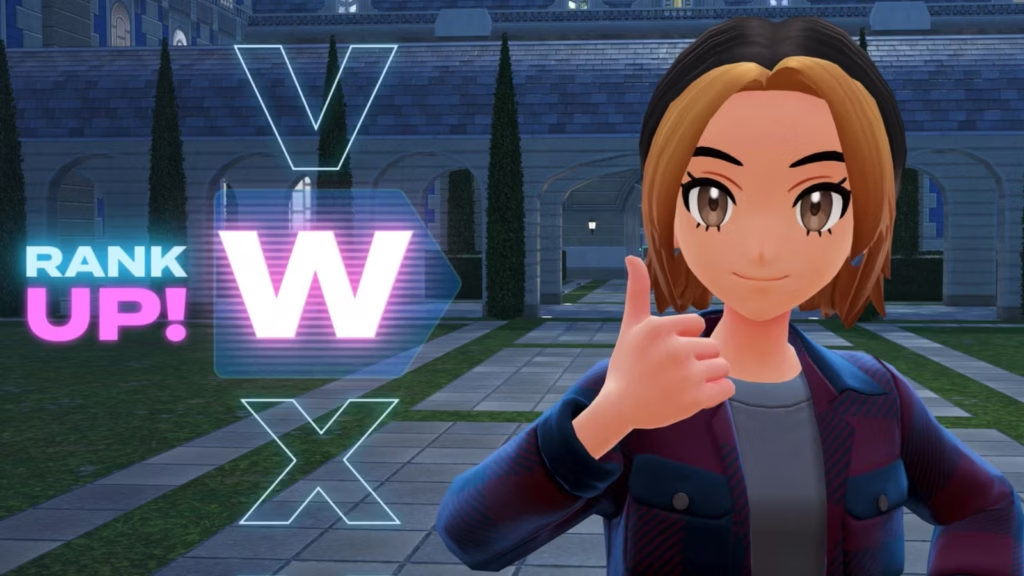
This is not the first time Pokémon has integrated a challenge gauntlet like this. Previous games had underground tournaments and battle towers. This game marks the first time in the series where this mechanic takes center stage. While it doesn’t provide the player with more than a narrative tool to advance the story, the fights and mechanics are generally quite fun. Especially the promotion battles feel similar to what gyms were in previous games.
Wrapped around the Battle Royale mode are several smaller side quests, which are actually quite charming. While most of them just end up in you battling trainers, many of them give you insight into how humans and Pokémon interact with each other. While they are not particularly complicated, these side missions are largely adorable and a welcome addition to the game.
Biggest Gameplay Change In A Long Time
It is fitting for a game that focuses so much on combat to also revitalize/reimagine how combat in a Pokémon game can work. Since we were children, we have been dreaming up a game that allows for real-time Pokémon combat. While we almost got that with Pokken Tournament a couple of years ago, it wasn’t until this game that we finally got as close to real-time combat without the game becoming a straight-up brawler.
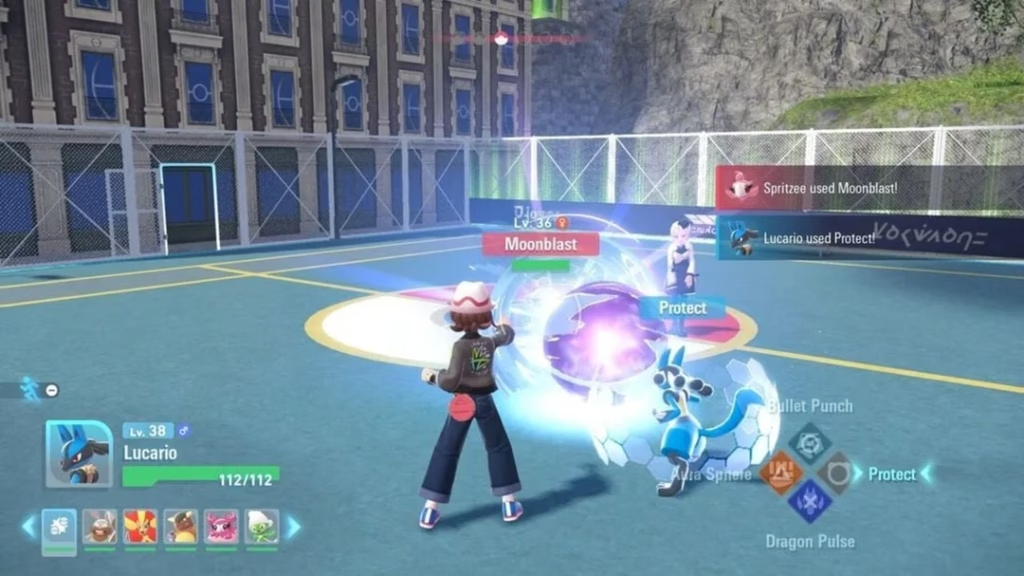
Essentially, when fights start, both trainers release their Pokémon. The player remains in control of the movement of their avatar, while the face buttons on the right Joy-Con turn into the four attacks that every Pokémon has. By clicking these buttons, your Pokémon will use them as instructed. What limits you, and where the strategy comes into play, is that these attacks have cooldowns until they can be used again.
Use all your attacks right out the gate, and you may be left open for an attack if the opponent decides to switch their Pokémon. Furthermore, because the “geometry” of fights is more crucial than ever before, some matchups may make it difficult for some attacks to hit in the first place. For instance, sometimes, when my Gyarados uses ice beam on a small foe and the foe comes very close to Gyarados, the beam will just pass over the opponent’s head.
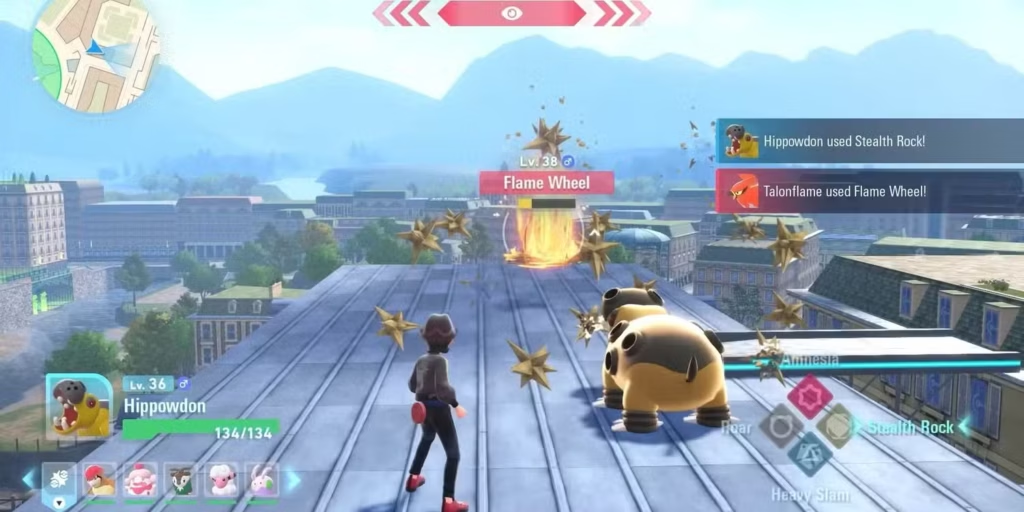
While these situations may be a little infuriating, these mechanics also allow you to avoid attacks depending on how you position yourself. As your Pokémon follows you around (though you do not directly control its movement), you can attempt to dodge attacks. From my experience, this is a lot harder than expected and mostly up to luck. However, if Gamefreak wants to stick to this style of combat for future games, giving us direct control over the Pokémon would be the next logical step.
Final Thoughts
So where does that leave us? Pokémon Legends Z-A is an oddball of a game. On the one hand, it features the freshest take on gameplay that we have seen in a long time. Is it the best? Well, that depends. Patty is clearly more in favor of the old style as she feels that the new style just isn’t quite there yet. I am torn, but ultimately like what they tried here. I’m curious what the next game will do. That is when we know whether Gamefreak has peaked or not. On the other side, the game has solid graphics. As in, stable. The art style is not particularly charming, especially compared to previous games. Concessions had to be made to ensure good performance. However, in our opinion, there is no real reason why such drastic optimization should be made based on the simplistic nature of the game.
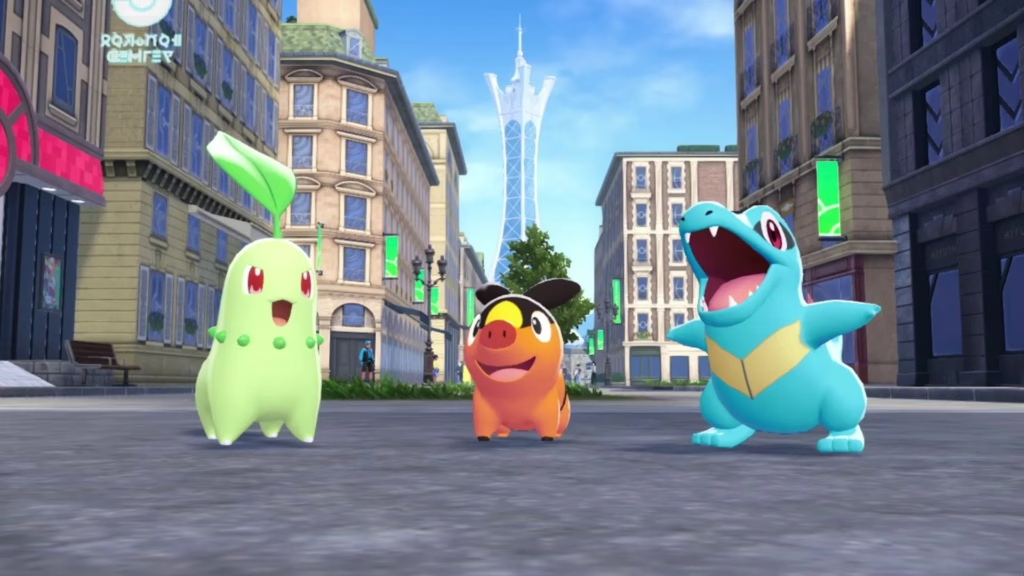
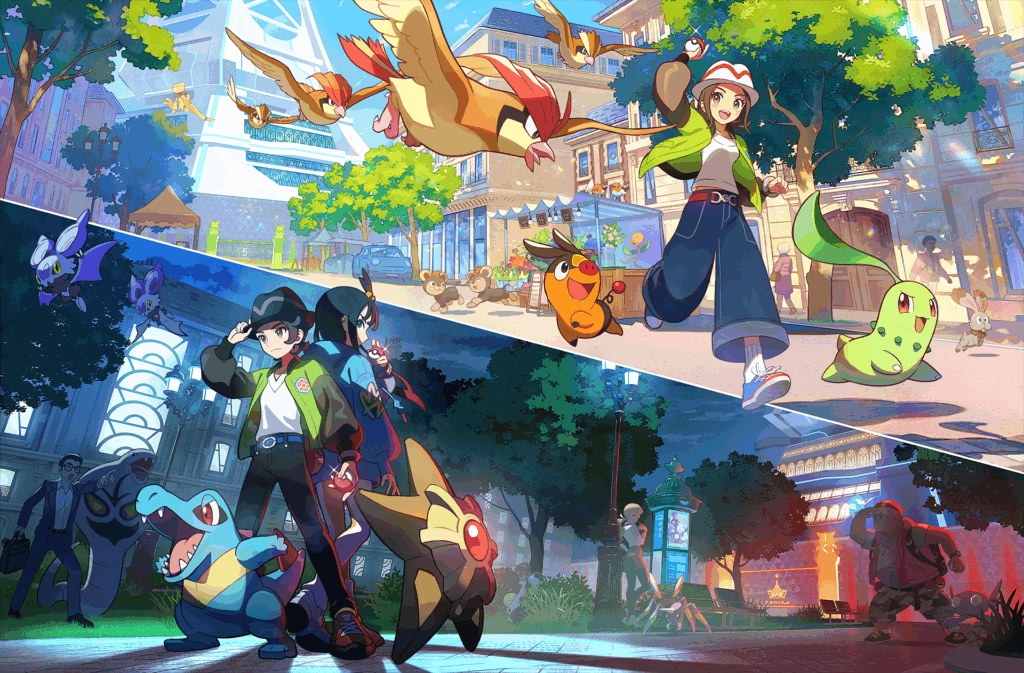
A final mention needs to be given to the game’s starter Pokémon. We are still trying to understand why these three were chosen. Chikorita and Totodile are cute and all, but Tepig? Thankfully, the Kalos starters can be obtained via side missions. But why go for these three? Especially since two of them are from the same generation. If you want to shake things up, why not have three different generations. This choice makes it seem like Cyndaquil was sidelined because of Tepig. We don’t know what the bigger crime is: the lackluster visuals or the removal of Cyndaquil.
We feel that at this point, you probably already know where you stand on Pokémon. Either you are ok with the suboptimal visuals and don’t mind as long as you get to spend time with your Pokémon (as we are), or you are not. So where do you stand on this question? This feels like one of the most controversial recent Pokémon games. Let us know on our socials or in the comments bellow!