You know that feeling you get when a new console launches and it has some games that look pretty cool, but they just don’t feel interesting enough to buy the console over? That was exactly how I felt when Returnal came out alongside the PlayStation 5. The release of Ratchet & Clank: Rift Apart, combined with a severe case of FOMO triggered by the pandemic, finally prompted me to splurge on the PlayStation 5. Now that I bought a shiny new PlayStation Portal, and a strong desire to play new games on it (as well as a 50% sale), I finally thought it was time to go down the Returnal rabbit hole. And without getting ahead of myself here, it’s a good trip.

A narrative full of mystery
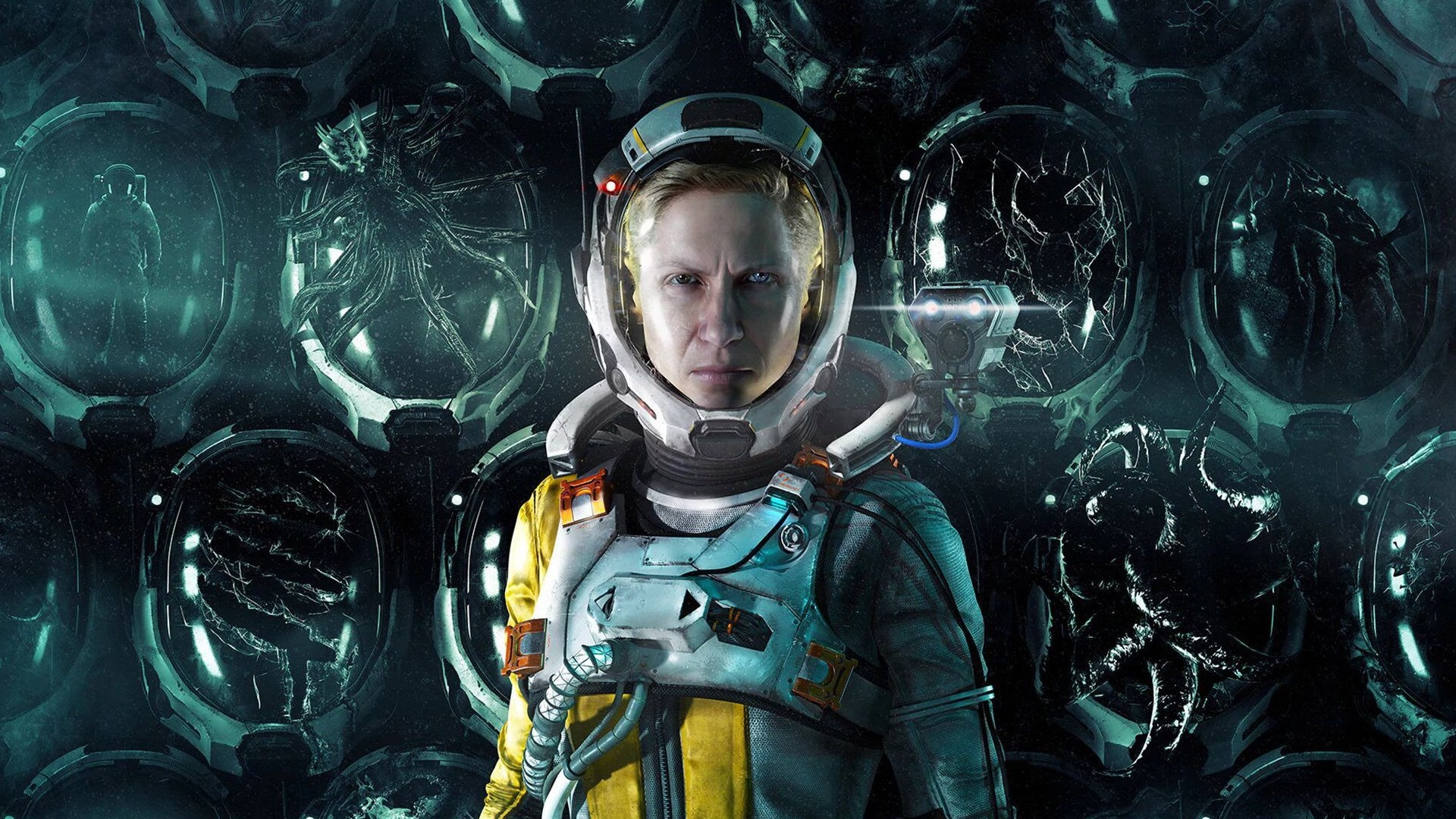
Returnal’s story is an intriguing one. You play as astronaut Selene, who crashes on an unknown planet with a single objective in her mind: to find the signal of the “white shadow.” As you traverse the first rooms, you will come across corpses of astronauts that look strikingly familiar. As Selene is unarmed, she grabs the corpse’s pistol and trudges on. The rooms she traverses are filled with strange alien creatures hell-bent on taking her down. Eventuall,y one succeeds…and Selene wakes up right after the initial crash on the planet. This is how the game sets up its “Groundhog Day”-esque gameplay loop.

Why is Selene stuck in this permanent loop? What is the white shadow? Why is her house found in some of these biomes? Who or what is that ominous Astronaut that keeps chasing her? I feel that by explaining more of the game’s story would venture too far into spoiler territory, but let me just say the following: it’s not a story that spells everything out for you. The game is told through flashbacks, voice recordings of Selenes’ previous attempts, and highly surreal, dream-like cutscenes. It’s an interesting story, but one that requires you to search for answers rather than being told everything outright.
Technically impressive…for its genre
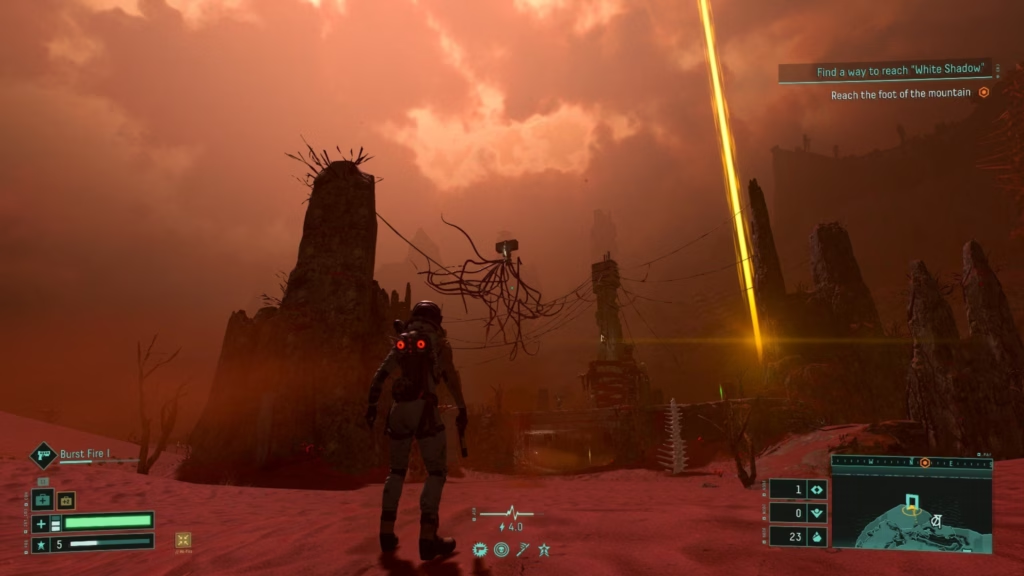
What is the one thing that any fast-paced roguelike needs to nail? Stable gameplay. Returnal largely achieves this by running at a dynamic 4K resolution while targeting 60 FPS. For full transparency, I played this game on my PlayStation Portal in its entirety. So while I didn’t get to experience the game in 4K, I must say that the game still struck me as a technically competent game without any noticeable framerate issues. The only times I experienced slowdowns were due to latency issues caused by temporary problems with the Portal. Artistically, the game manages to paint a wonderfully desolate image of each of the biomes Selene visits. From the overgrown ruins to the sandy deserts, the art style is meticulously crafted to bring these biomes to life.
On the other side of the spectrum, I found that while the voice acting was fairly solid, the game’s overall audio direction wasn’t all too impressive. There is no music to really speak of or anything else that makes the game stick out.
Incredibly deep and satisfying combat
I was wrong before; what any roguelike truly needs to nail is a satisfying gameplay loop. These games rely on the player coming back time and time again to perfect each “run.” How does Returnal play, then? Well, the game is essentially split up into several biomes, each with randomly arranged rooms. This means that while you are never sure which room will follow next, you will be familiar with the room’s layout once you enter it. These rooms are typically filled with enemies and loot. To help you combat the slew of enemies the game throws at you, you are given an arsenal of different weapon choices. The key is understanding that you can only ever take a single weapon with you at any given time. There are pistols, shotguns, machine guns, rocket launchers, and many more for you to find. And aside from their base functionality, they may come with additional perks and bonuses, such as ricocheting shots, faster reloads, or extra-large magazines. To top it off, every weapon has a secondary firing mode that unleashes a powerful attack. All this variety means that two weapon types can function completely differently.
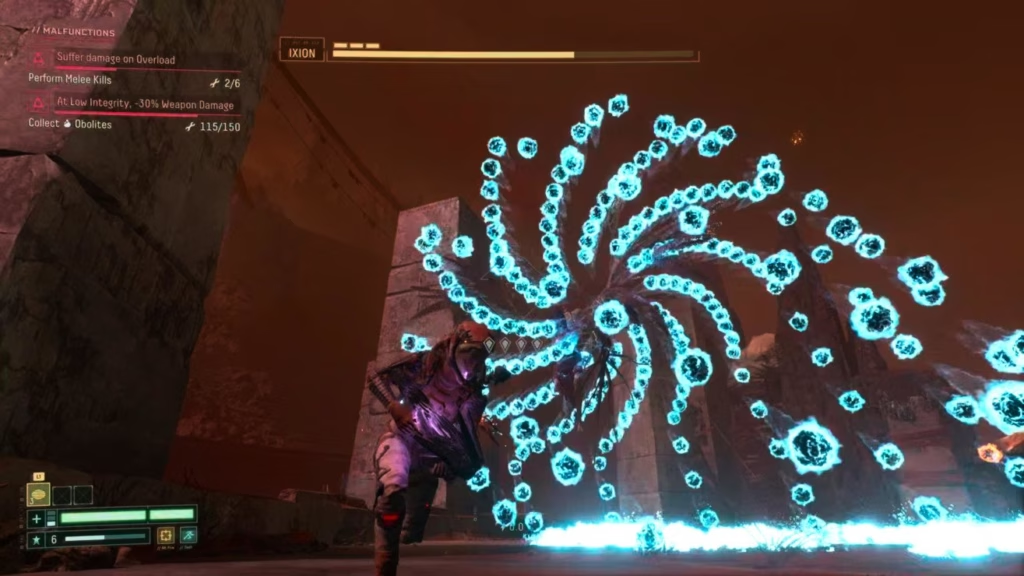
Guns, however, aren’t the only thing you have in your arsenal. In addition to a wide variety of guns, you will also find three types of items. First, there’s your standard consumables that increase your health or deal damage to enemies. Then there are artifacts. Strange objects that are rather rare but give Selene semi-permanent stat bonuses, such as 20% improved defensive or offensive capabilities. And lastly,, there are parasites. Parasites are found more frequently than artifacts and provide interesting bonuses, but always come with some kind of downside. For instance, one parasite might improve your melee damage by 50% (more than any artifact), but increase your cooldown for your dashes. Activating parasites always poses an interesting risk/reward decision – and I have had plenty of runs that were either saved, or destroyed by having the wrong parasite equipped.
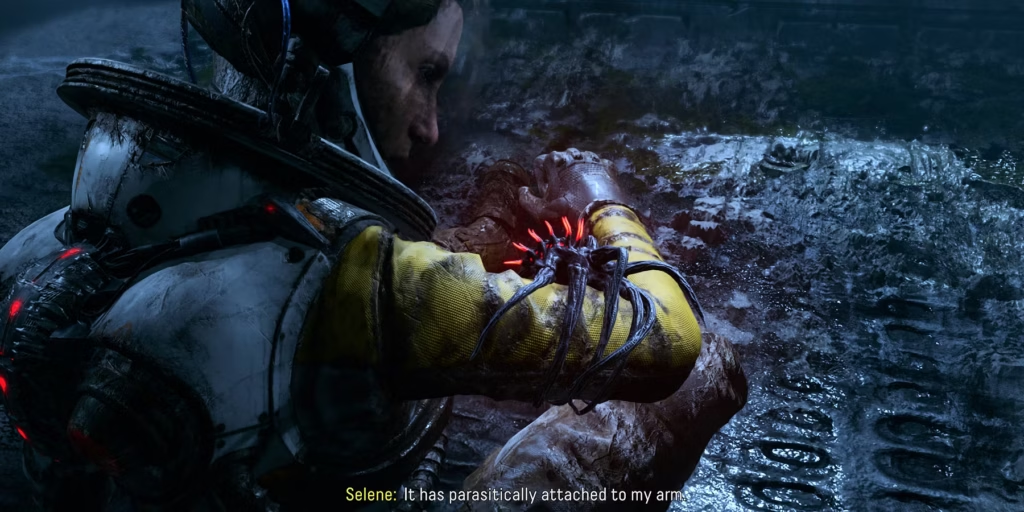
Thankfully, some permanent items and improvements are kept regardless of whether you die or not. Upon defeating a biome’s boss, Selene typically unlocks some permanent item. A good example of this is the grappling hook, which is unlocked fairly early. Unlocking these items presents a type of milestone that unlocks alternative paths and rooms in earlier biomes, therefore giving you a leg up in advancing future runs. In addition to these items, investing your time with multiple weapons unlocks further abilities and traits, making weapons even deadlier the more you use them. It’s all very satisfying. Add to all this the logs you find, the cyphers that help you translate the alien tex,t and you have yourself a game that offers plenty to do.
A satisfying roguelike with poor pacing
So why did I stop playing this game after roughly 25 hours? Well, I can say with a certain level of pride that I finished this game’s main storyline. This is a tough game that will sometimes leave you wondering what kind of BS the game just threw at you. Some runs are seemingly cursed, while others give you all the best items right from the get-go. That’s fine and comes with the roguelike territory. That said, the game made one rather strange decision, namely to hide its true ending behind an annoying fetch quest. Not only do you have to find some random items in all the biomes again, but you also then need to complete the final boss fight again. This is the kind of padding that doesn’t do the game any justice and mostly just frustrates.
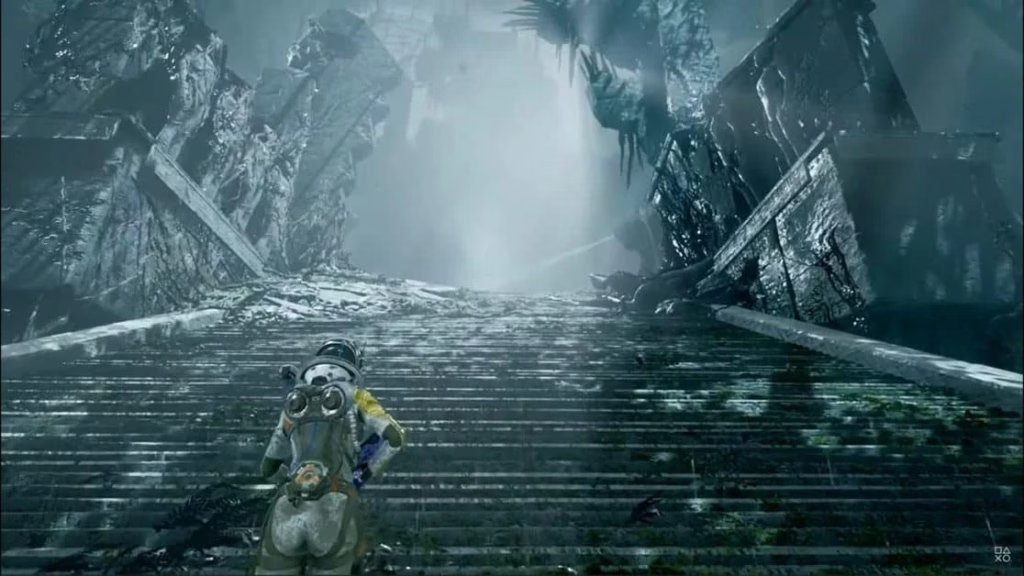
So, where does that leave the game then? I got this game because I wanted a game that allowed me to turn off my brain and just focus on the moment-to-moment gameplay. A game that would allow me to test my skill and face insurmountable odds (i.e., the bullet hell these enemies unleash), and in that regard, the game accomplished what it set out to do. While the ending left me with a little bit of a sour taste in my mouth, the time I spent playing up until that point had me completely hooked.
So, what do you think about Returnal? Is this the kind of game you were looking for, or are Roguelikes just not your thing? Let me know in the comments, and happy gaming to you all!